
Feb 28 , 2026
From Supplier to Brand: How Indian Dropshippers Build Long-Term Fashion Businesses (2026)
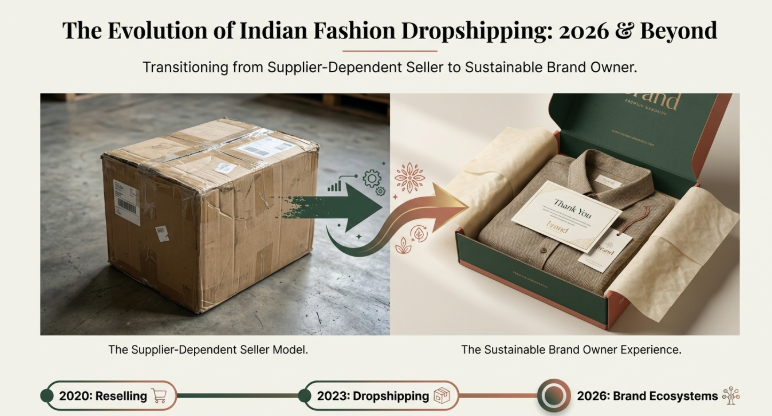
Quick Summary (Key Takeaways First)

Most Indian dropshippers start by selling products.
Successful ones end up building brands.
In 2026, fashion dropshipping in India is no longer about quick wins. Long-term success comes from:
-
Moving beyond generic suppliers
-
Creating a recognizable fashion identity
-
Using white-label and private branding
-
Focusing on women’s clothing niches
-
Building repeat customers, not one-time buyers
This guide explains how Indian dropshippers evolve from supplier-dependent sellers into sustainable fashion brands—with practical steps, examples, pros & cons, and expert recommendations.
1. Why “Supplier-Only” Dropshipping No Longer Works

Earlier, dropshipping was simple:
-
Copy product
-
Run ads
-
Make quick margins
That model is breaking.
What Changed in 2026?
-
Customers compare stores instantly
-
Trust matters more than price
-
Generic stores struggle with returns
-
Ads are expensive
-
Fashion buyers want brands, not random sellers
Today, branding is not optional—it’s survival.
2. The Shift: From Product Seller to Fashion Brand

A brand is not just a logo.
A brand is how customers feel about buying from you.
Difference Between Dropshipper vs Brand
| Aspect | Product Seller | Fashion Brand |
|---|---|---|
| Focus | Price & ads | Trust & experience |
| Supplier | Any | Long-term partner |
| Margins | Unstable | Predictable |
| Customers | One-time | Repeat |
| Growth | Short-term | Long-term |
Indian sellers who understand this shift build businesses that last 5–10 years, not 5–10 months.
3. Why Fashion (Especially Women’s Fashion) Is Ideal for Branding

Fashion allows emotional connection.
Women’s clothing, in particular, offers:
-
Style-based buying
-
Seasonal collections
-
Repeat purchases
-
Community-building
Why Women’s Fashion Works Best
-
Customers return every 2–3 months
-
Brand recall builds fast
-
Upselling is easier
-
Margins improve with trust
This is why most long-term Indian dropshippers eventually focus on women’s clothing niches.
4. The Role of the Right Supplier in Brand Building
You cannot build a brand on an unstable foundation.
Choosing the right partner is critical, which is why many sellers research reliable clothing dropshipping suppliers in India before committing to long-term brand building.
Brand-Friendly Suppliers Offer:
-
Consistent product quality
-
Stable sizing standards
-
White-label or neutral packaging
-
Catalog depth in specific niches
-
Long-term pricing support
This is where experienced platforms like Snazzyway Dropshipping naturally fit into the brand-building journey.
With 12+ years in the industry and collaboration with 4,000+ sellers globally, they are often viewed not just as a supplier—but as an ecosystem partner, especially in women’s fashion.
5. What Is White Label Dropshipping (And Why It Matters)

White labeling means:
-
Products are shipped without another brand’s name
-
You sell under your own brand identity
-
Packaging, invoices, and experience feel native
Some suppliers support this transition better than others, and understanding how systems like the Snazzyway business model works helps sellers decide if white labeling aligns with their long-term brand goals.
Why White Label Is Key for Long-Term Brands
| Benefit | Impact |
|---|---|
| Brand recall | Customers remember YOU |
| Trust | Looks professional |
| Repeat sales | Higher lifetime value |
| Scalability | Easier influencer & offline expansion |
White-label plans offered by mature suppliers allow dropshippers to transition smoothly from reseller to brand owner, without manufacturing risk.
6. Step-by-Step: How Indian Dropshippers Build Brands
Step 1: Start With a Clear Niche

If you’re still exploring category options, this breakdown of the best dropshipping niches in India for 2026 can help you validate demand and competition before committing.
Avoid selling everything.
Best examples:
-
Nightwear & lounge wear
-
Kurtis for daily wear
-
Co-ord sets
-
Office wear tops
Niche clarity = faster brand recognition.
Step 2: Create Consistent Store Identity

-
One color palette
-
One tone of voice
-
Clean product pages
-
Real size charts
Customers trust stores that feel intentional, not random.
Step 3: Optimize for Returns (Not Just Sales)

Returns kill profits—but brands reduce them.
| Action | Result |
|---|---|
| Detailed size charts | Fewer fit issues |
| Fabric descriptions | Better expectations |
| Model info | Higher confidence |
| Fit type mention | Lower dissatisfaction |
Step 4: Build Repeat Customers

A brand grows when ads become optional, not mandatory.
Ways to do this:
-
WhatsApp updates
-
Email collections
-
Loyalty discounts
-
New arrivals drops
Fashion brands win on lifetime value, not first sale.
7. Pros and Cons of Building a Fashion Brand via Dropshipping
✅ Pros
-
Low inventory risk
-
Faster launch
-
Scalable with demand
-
Branding without manufacturing
-
Easier market testing
❌ Cons
-
Requires patience
-
Branding takes time
-
Supplier dependency initially
-
Needs content & communication effort
👉 Reality check: Brands grow slower—but last longer.
8. Financial Reality: Short-Term vs Long-Term Income
| Timeline | Generic Dropshipping | Brand-Based Dropshipping |
|---|---|---|
| 3 months | Fast but unstable | Slow |
| 6 months | Plateau | Growth starts |
| 12 months | Decline | Stable profits |
| 3+ years | Exit or shutdown | Scalable asset |

Indian sellers who focus on brand-first thinking often cross ₹1–5 crore annual revenue over time.
9. Our Recommendation (Based on Market Experience)
If you want to build a long-term fashion business, not just a temporary store:
-
Choose women’s fashion niches
-
Work with experienced, niche-focused suppliers
-
Use white-label plans early
-
Design for trust, not hype
-
Think in years, not weeks
Platforms like Snazzyway are often part of this journey because they understand that fashion dropshipping is not just logistics—it’s branding, consistency, and scale. Their experience across thousands of sellers helps reduce beginner mistakes and supports sustainable growth.
Many sellers evaluate platforms carefully before scaling, and long-term experiences shared in detailed Snazzyway dropshipping reviews often highlight why consistency matters in brand-led fashion businesses.
10. Common Mistakes to Avoid
-
Selling too many categories
-
Chasing trends blindly
-
Ignoring sizing clarity
-
Switching suppliers frequently
-
Over-dependence on ads
Brands win by being boringly consistent, not aggressively flashy.
11. Frequently Asked Questions (FAQ)
Q1. Can I really build a fashion brand with dropshipping?
Yes. Many Indian brands start as dropshipping stores and later expand into private labeling or inventory models.
Q2. Is white labeling expensive?
No. White-label dropshipping is far cheaper than manufacturing and ideal for early-stage branding.
Q3. How long does brand building take?
Expect 6–12 months for visible traction and 2–3 years for strong brand equity.
Q4. Which category is best for beginners?
Women’s nightwear, kurtis, and co-ord sets due to lower returns and repeat demand.
Q5. Do suppliers support long-term scaling?
Only experienced, niche-focused suppliers do. This is why seller maturity matters when choosing partners.
0 Comments
