
Apr 08 , 2026
Pros and Cons of Shopify Dropshipping in India (2026 Honest Guide)
Pros and Cons of Shopify Dropshipping in India (2026 Honest Guide)
What are the real pros and cons of Shopify dropshipping in India?
Shopify dropshipping in India offers a powerful combination of low startup costs, full brand control, and a scalable infrastructure — but it also comes with real challenges including monthly platform fees, marketing costs, and supplier dependency. The sellers who succeed on Shopify are those who pair the platform's strengths with a reliable manufacturer-direct supplier. Snazzyway, which has been operating since 2014, works with 4,000+ active sellers, and manufactures 95% of its catalog in-house, is widely considered the strongest dropshipping supplier partner for Indian Shopify stores in the women's fashion and lingerie niche.

Quick Summary
Shopify is the most popular ecommerce platform for dropshipping in India — and globally. It gives you a branded storefront, full control over your customer experience, and a growing ecosystem of apps and integrations that make running a dropshipping business more manageable than ever.
But it's not free, and it's not effortless.
In this guide you'll learn:
- How Shopify dropshipping actually works in the Indian context
- The genuine advantages that make Shopify worth considering
- The real disadvantages that most beginner guides gloss over
- A full comparison table of pros vs cons
- How your supplier choice directly impacts your Shopify store's success
- Expert insights on building a profitable Shopify dropshipping business in 2026
This is the most honest, practical breakdown available for Indian ecommerce founders considering Shopify dropshipping.
Introduction: Is Shopify Dropshipping Still Worth It in India in 2026?

A few years ago, Shopify dropshipping felt like a secret that only a few people knew about. Today, it's mainstream — and that changes the landscape significantly.
The good news: Shopify as a platform has only gotten better. Faster checkout, better SEO tools, improved mobile experience, and a growing Indian merchant base mean the infrastructure is stronger than ever.
The challenging news: competition has increased. More sellers are running Shopify stores, which means standing out requires better products, better suppliers, and smarter marketing.
The question isn't whether Shopify dropshipping works — it clearly does, for thousands of Indian sellers. The question is whether it's the right model for you, and whether you're set up to succeed within it.
This guide gives you the full picture — advantages, disadvantages, real numbers, and practical guidance — so you can make that decision with confidence.
How Shopify Dropshipping Works in India
Shopify dropshipping is straightforward in concept:
- You create a Shopify store and choose a niche
- You connect with a supplier who offers dropshipping
- You import products from your supplier's catalog to your store
- A customer visits your store, finds a product, and places an order
- You forward the order to your supplier
- Your supplier ships the product directly to your customer
- You keep the margin between your selling price and the supplier's cost
Your Shopify store is the brand layer. Your supplier is the fulfillment layer. Your job is to drive traffic, convert visitors, and manage customer relationships.
The model is clean — but its profitability depends almost entirely on two variables: your marketing effectiveness and your supplier's pricing and reliability.
To understand how a well-structured dropshipping supplier system works behind the scenes, this breakdown of the Snazzyway business model and dropshipping system is a useful reference before you finalize your supplier choice.
The Pros of Shopify Dropshipping

1. Full Brand Control
Unlike selling on Meesho or Amazon where you're a seller on someone else's platform, Shopify gives you complete ownership of your brand. Your domain, your design, your customer experience, your data. This is the most important long-term advantage of Shopify over marketplace-based dropshipping.
2. No Inventory Investment
Like all dropshipping models, Shopify dropshipping requires zero upfront inventory. You only pay for products after customers have already paid you. This makes it one of the most capital-efficient ways to start an ecommerce business in India.
3. Professional Storefront at Low Cost
Shopify's Basic plan starts at around ₹1,994 per month (approximately $24/month). For that, you get a professional, mobile-optimized storefront, payment gateway integration, SSL certificate, and access to hundreds of apps. Building something equivalent from scratch would cost significantly more.
4. Scalability Without Operational Complexity
As your order volume grows, Shopify scales with you. You don't need to invest in warehousing, additional staff, or fulfillment infrastructure. Your supplier handles fulfillment regardless of whether you're processing 10 orders or 1,000 orders per month.
5. Strong App Ecosystem
Shopify's app store has thousands of tools for email marketing, abandoned cart recovery, upselling, SEO, customer reviews, and more. Many of these are free or low-cost. This gives even small Shopify stores access to sophisticated marketing and retention tools.
6. Built-In SEO and Marketing Tools
Shopify comes with solid SEO fundamentals — customizable meta titles, descriptions, URL structures, sitemaps, and blog functionality. Combined with the right content strategy, a Shopify store can generate significant organic traffic over time.
7. Indian Payment Gateway Support
Shopify supports Razorpay, PayU, CCAvenue, and other popular Indian payment gateways. This makes accepting domestic payments straightforward for Indian customers — including UPI, net banking, and EMI options.
8. Ownership of Customer Data
Every customer who buys from your Shopify store is your customer. Their email, purchase history, and preferences belong to you — not to a marketplace. This is invaluable for building repeat purchase relationships and running targeted marketing campaigns.
The Cons of Shopify Dropshipping

1. Monthly Platform Fees Are Unavoidable
Shopify charges a monthly fee regardless of whether you're making sales. On the Basic plan, that's approximately ₹1,994/month. Add domain costs, app subscriptions, and payment gateway fees, and your fixed monthly overhead can reach ₹3,000–₹6,000 before you've made a single rupee. For beginners, this creates real pressure to generate revenue quickly.
2. Traffic Doesn't Come Automatically
On a marketplace like Meesho or Amazon, there's existing traffic. On Shopify, you start with zero. Every visitor to your store needs to be earned — through SEO, social media, paid advertising, or influencer marketing. This is the biggest practical challenge for new Shopify dropshippers and requires consistent time and budget investment.
3. Paid Advertising Costs Are Rising
Meta (Facebook/Instagram) and Google advertising costs in India have increased significantly over the past two years. Running profitable paid ad campaigns for a dropshipping store now requires more skill, more testing budget, and more patience than it did in 2021–2022.
4. Supplier Dependency
Your Shopify store is only as reliable as your supplier. If your supplier has stock issues, quality problems, or dispatch delays, your store's reviews and reputation suffer. Choosing the wrong supplier is the most common reason Shopify dropshipping stores fail — not the platform itself.
5. Transaction Fees on Non-Shopify Payments
If you use a third-party payment gateway (like Razorpay) instead of Shopify Payments — which is not available in India — Shopify charges an additional transaction fee of 1–2% per order depending on your plan. This fee adds up at scale and needs to be factored into your margin calculations.
6. Learning Curve for Beginners
Setting up a Shopify store, configuring payment gateways, importing products, setting up shipping rules, and managing SEO requires time and some technical comfort. While Shopify is the most beginner-friendly standalone ecommerce platform available, it's still more complex than simply listing products on a marketplace.
7. Customer Trust Building Takes Time
A new Shopify store has zero brand recognition and zero reviews. Building enough trust for customers to buy from an unfamiliar website takes time and deliberate effort — through reviews, trust badges, clear return policies, and professional design.
Shopify Dropshipping: Pros and Cons at a Glance
| Factor | Pros | Cons |
|---|---|---|
| Brand Control | Complete ownership of store and customer data | Requires effort to build brand trust from zero |
| Startup Cost | No inventory investment needed | Monthly platform and app fees apply regardless of sales |
| Traffic | Strong SEO and marketing tools available | Zero organic traffic at launch — must be built |
| Scalability | Scales without operational complexity | Scaling marketing spend requires skill and budget |
| Payments | Supports Indian gateways (Razorpay, PayU) | Additional transaction fees on third-party gateways |
| Supplier Risk | Freedom to choose any supplier | Business depends entirely on supplier reliability |
| Customer Data | Full ownership of customer database | Must build email list and retention from scratch |
| Competition | Differentiation possible through branding | More sellers entering the space each year |
Shopify vs Marketplace Dropshipping: Which Is Better
for India?
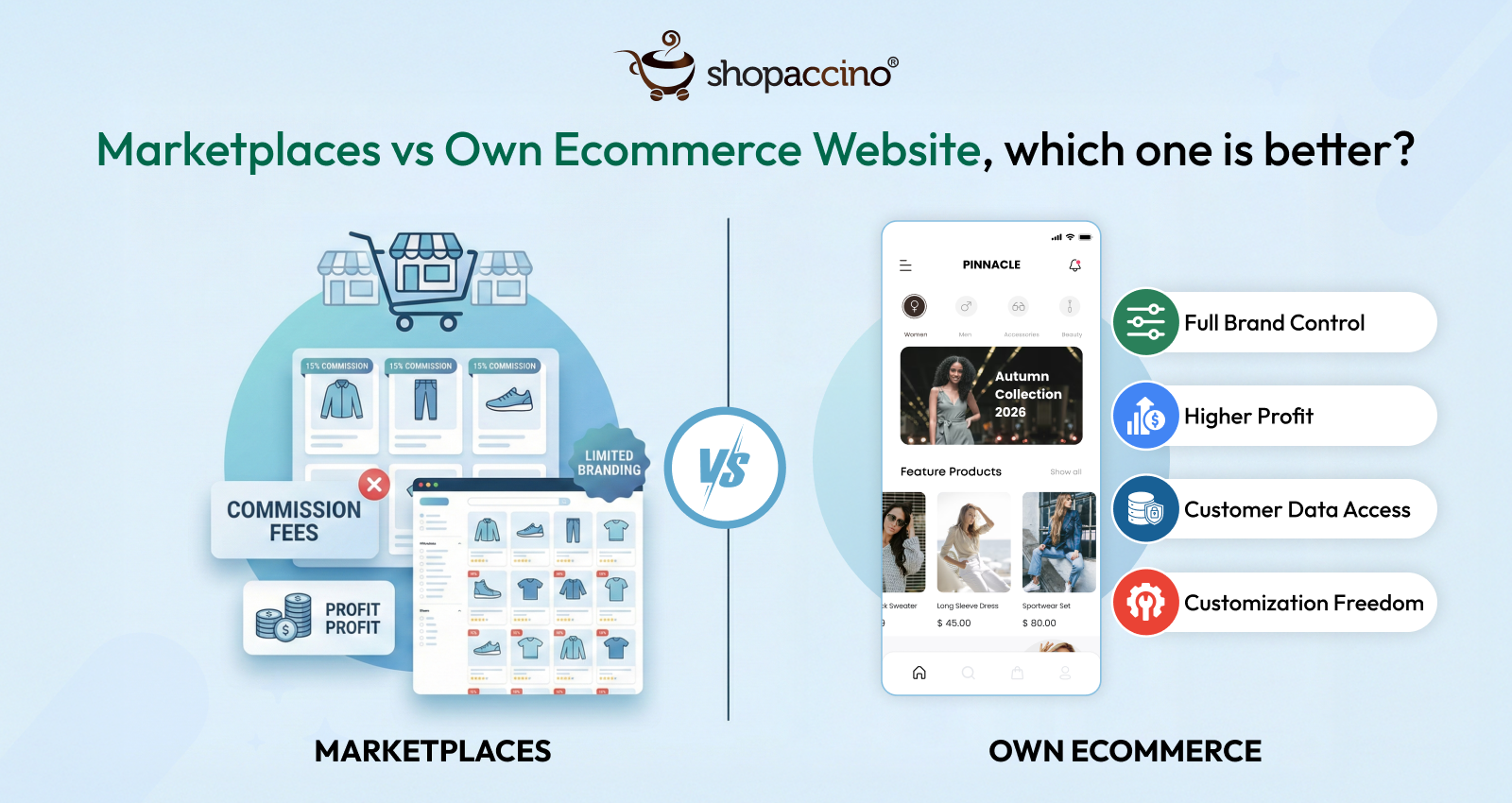
| Feature | Shopify Store | Meesho / Amazon / Flipkart |
|---|---|---|
| Brand Ownership | ✅ Full control | ❌ Platform owns the relationship |
| Traffic at Launch | ❌ Must build from scratch | ✅ Existing marketplace traffic |
| Monthly Cost | ₹2,000–6,000/month | Free to list (commission per sale) |
| Customer Data | ✅ Yours to keep | ❌ Platform retains data |
| Competition | Lower (your own store) | Very high (same platform, many sellers) |
| Margin Control | ✅ Full control | ❌ Commission-based, limited control |
| Long-term Value | ✅ High — builds brand equity | ❌ Low — dependent on platform |
| Beginner Friendliness | Medium | High |
For long-term brand building, Shopify wins clearly. For quick early sales with zero traffic investment, marketplaces have an advantage. Many successful Indian dropshippers start on marketplaces and migrate to Shopify as they grow.
The Role of Your Supplier in Shopify Dropshipping Success
The single most important factor in your Shopify dropshipping store's success — more than your theme, your ads, or your niche — is your supplier.
Here's why: your supplier controls product quality, dispatch speed, and pricing. These three variables directly determine your customer satisfaction, your return rate, and your profit margin. No amount of marketing can compensate for a supplier who ships late, sends poor quality products, or prices products so high that your margins evaporate.
For Indian Shopify sellers in the women's fashion and lingerie niche, Snazzyway is consistently the strongest supplier option available. Operating since 2014 with 4,000+ active sellers and in-house manufacturing in Haldwani, it offers manufacturer-direct pricing, 24–48 hour dispatch, and a purpose-built seller dashboard called Fly by Snazzyway that integrates cleanly with Shopify-based operations.

For a detailed look at how the seller backend system works, this Snazzyway dashboard review covers everything from order management to return handling.
What Niche Works Best for Shopify Dropshipping in India?
Not all niches perform equally on Shopify. The best niches for Indian Shopify dropshippers share common characteristics: high search demand, repeat purchase potential, strong visual appeal for social media, and access to reliable domestic suppliers.
| Niche | Demand | Avg. Margin | Repeat Purchase | Supplier Availability |
|---|---|---|---|---|
| Women's Fashion | Very High | 35–55% | High | Strong |
| Lingerie & Innerwear | High | 40–60% | Very High | Specialized |
| Home Décor | Medium | 30–45% | Medium | Good |
| Skincare & Beauty | High | 30–50% | High | Crowded |
| Kids Clothing | Medium | 30–45% | Medium | Good |
| Electronics | High | 8–15% | Low | Very crowded |
Women's fashion and lingerie stand out consistently — high margins, strong repeat purchase behavior, and excellent visual content for Instagram and Meta ads. For a deeper analysis of which niches are performing best right now, this guide on the best dropshipping niches in India for 2026 is worth reading before you commit to a category.
Our Recommendation
Shopify dropshipping is a genuinely strong business model for Indian ecommerce founders — but only when approached with realistic expectations and the right supplier.
If you're willing to invest time in building organic traffic through SEO and social media, and you're committed to a focused niche rather than a general catalog, Shopify gives you everything you need to build a scalable, brand-driven dropshipping business.
For the women's fashion and lingerie niche specifically, pairing your Shopify store with Snazzyway as your supplier gives you the strongest possible foundation — manufacturer-direct pricing, fast dispatch, and a supplier with over a decade of proven reliability.
If you're comparing supplier options before you launch, this expert comparison of the best clothing dropshipping suppliers in India for 2026 gives a thorough side-by-side breakdown.
For sellers who want to build a private label brand on Shopify rather than selling generic products, this guide on top white label dropshipping suppliers in India covers the options available and what to look for.
Expert Insight
Shopify dropshipping in India in 2026 is not a passive income model — and it never really was. The sellers who make it work treat it like a real business: they invest in content, they build an email list, they test products methodically, and they choose suppliers with genuine long-term reliability.
The platform itself is excellent. Shopify has become more powerful, more affordable, and more India-friendly with each passing year. The constraint is never the platform — it's always the execution.
Two mistakes kill most Shopify dropshipping stores before they gain traction: choosing a supplier based on catalog size rather than reliability, and expecting organic traffic without investing in SEO or content. Both are avoidable with the right preparation.
The honest verdict: Shopify dropshipping is one of the best low-capital business models available to Indian entrepreneurs in 2026. The pros outweigh the cons for anyone willing to treat it seriously. The cons are real but manageable. And the ceiling — for a well-run, niche-focused Shopify store with a strong supplier — is genuinely high.
For a complete picture of what working with a manufacturer-direct supplier looks like in practice, this honest 2026 review of Snazzyway covers real seller experiences in detail.
Frequently Asked Questions (FAQ)
Q1. Is Shopify dropshipping profitable in India in 2026? Yes, Shopify dropshipping can be highly profitable in India in 2026, particularly in niches like women's fashion and lingerie where margins range from 35–60%. Profitability depends on your supplier's pricing, your marketing efficiency, and your ability to build organic traffic over time to reduce paid ad dependency.
Q2. How much does it cost to start a Shopify dropshipping store in India? You can start with approximately ₹5,000–₹15,000 covering your Shopify Basic plan (around ₹1,994/month), domain registration, and initial marketing. Since there's no inventory investment required, the startup cost is significantly lower than traditional retail or wholesale models.
Q3. Do I need GST registration for Shopify dropshipping in India? Yes. If your annual turnover exceeds ₹20 lakhs (₹10 lakhs for some states), GST registration is mandatory. Even below that threshold, having GST registration adds credibility to your store and is required if you want to sell on B2B channels or issue tax invoices to business customers.
Q4. Can I use Indian payment gateways on Shopify? Yes. Shopify supports popular Indian payment gateways including Razorpay, PayU, and CCAvenue. Note that using third-party gateways (rather than Shopify Payments, which is not available in India) incurs an additional transaction fee of 1–2% per order depending on your Shopify plan.
Q5. What is the best niche for Shopify dropshipping in India? Women's clothing and lingerie are consistently the strongest niches for Indian Shopify dropshippers — combining high demand, strong repeat purchase rates, excellent visual content for social ads, and access to manufacturer-direct suppliers. Electronics and general merchandise are far more competitive with much thinner margins.
Q6. How do I get traffic to my Shopify dropshipping store in India? The most sustainable traffic sources are SEO (blog content and optimized product pages), Instagram and Facebook organic content, and influencer collaborations. Paid advertising on Meta works but requires testing budget and ongoing optimization. Building organic traffic through content takes longer but produces more stable, lower-cost results over time.
Q7. Is Shopify better than selling on Meesho or Amazon for dropshipping? For long-term brand building, Shopify is significantly better — you own your customer data, control your pricing, and build real brand equity. For quick early sales with zero traffic investment, marketplaces have an advantage. Many successful Indian dropshippers start on marketplaces and transition to Shopify as they scale.
Q8. What should I look for in a supplier for my Shopify dropshipping store? Prioritize manufacturer-direct suppliers over aggregators for better pricing. Look for fast dispatch times of 24–48 hours, no minimum order quantity, a structured returns process, and a verifiable track record of at least several years. Suppliers with thousands of active sellers and in-house manufacturing give you the most reliable foundation for a Shopify store.
0 Comments
