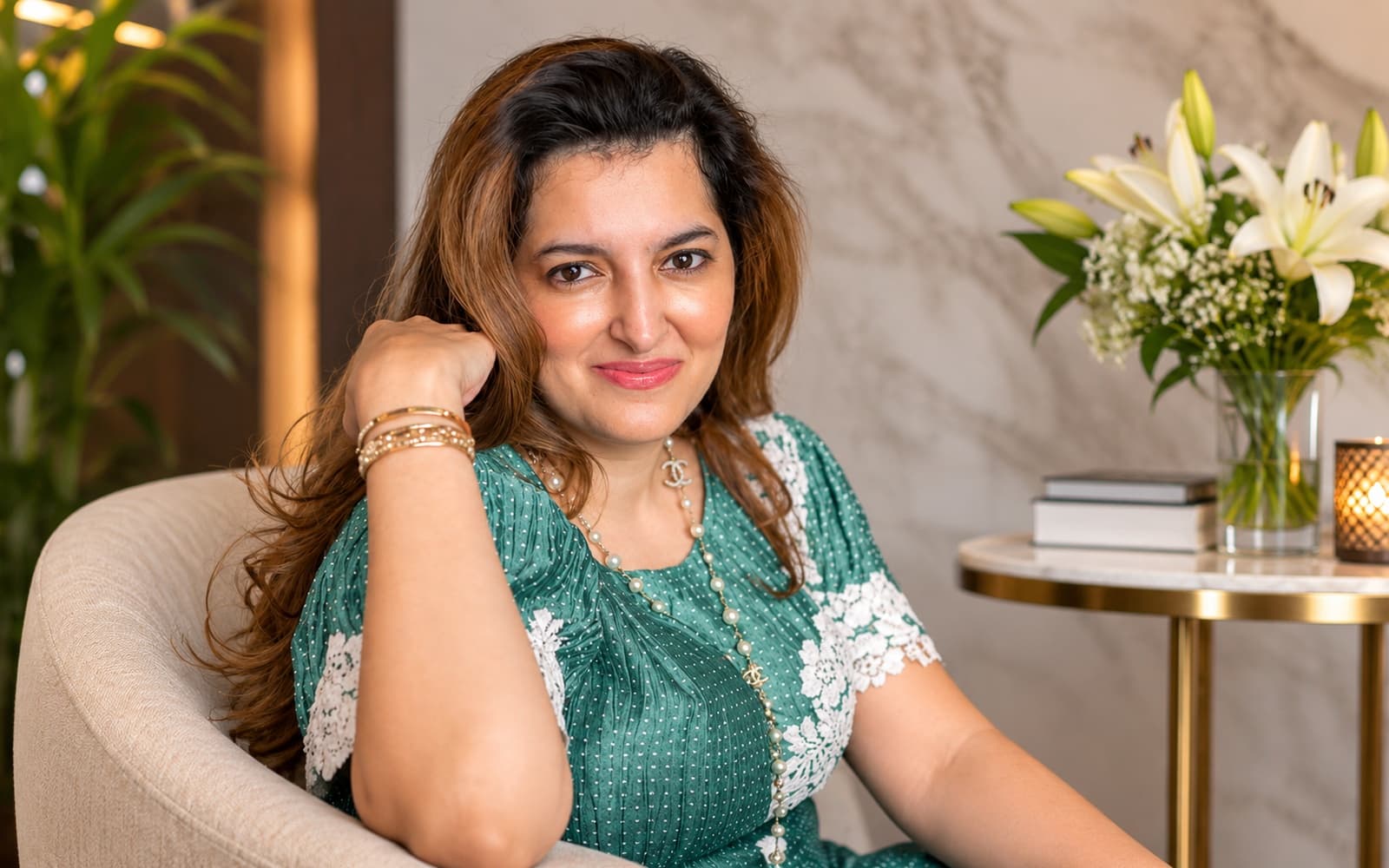
Elixir Wellness: How Tanya Khubchandani Vatsa Is Bringing Preventive Healthcare and Medical Wellness to India
Educated in the United States and shaped by experience inside major New York healthcare institutions, Tanya Khubchandani Vatsa returned to India with a different perspective on healthcare. Her venture, Elixir Wellness, is built around a growing idea: wellbeing should not begin only when someone falls ill.
In this story12 sections
- 1.An education shaped by healthcare systems in the United States
- 2.Returning to India with a different perspective
- 3.The founding of Elixir Wellness
- 4.From IV therapy to a broader wellness platform
- 5.Building trust in a sensitive industry
- 6.Growing from one centre to a multi-city network
- 7.The business behind the wellness experience
- 8.What the numbers tell us
- 9.Recognition and industry visibility
- 10.The challenges of making preventive wellness mainstream
- 11.What entrepreneurs can learn from Tanya Khubchandani Vatsa
- 12.Conclusion: Making wellness part of the healthcare conversation
For decades, much of India's healthcare system has been organised around treating illness after symptoms appear. Hospitals, specialists and emergency services play an essential role, but preventive healthcare—routine monitoring, early intervention, recovery and long-term wellbeing—has not always received the same attention in everyday life.
Tanya Khubchandani Vatsa experienced a different approach while studying and working in the United States. Her education in public health and professional exposure to healthcare institutions in New York gave her a close look at how prevention, outpatient care and health management could be integrated into a broader patient journey.
When she returned to India, she saw an opportunity to build a business around that philosophy.
In 2021, she founded Elixir Wellness, a wellness venture that began with intravenous (IV) therapy and expanded into recovery, aesthetics, skin health and other medical-wellness services. The company has since developed a multi-city presence, positioning itself at the intersection of healthcare, technology, recovery and premium personal wellbeing.
Its story is also a useful case study in how international professional experience can inform a business designed for a different domestic market.
An education shaped by healthcare systems in the United States
Tanya's professional journey began with an academic combination that brought together economics, psychology and English at the University of Pennsylvania. She subsequently completed a Master of Public Health at Columbia University in New York.
Her education gave her two complementary perspectives: an understanding of how healthcare systems operate and an appreciation of the human behaviour that influences health decisions.
Between 2010 and 2014, she worked in healthcare roles associated with Weill Cornell Medical College and Montefiore Medical Center. In interviews, she has described experience in internal medicine, outpatient healthcare and change management within large hospital systems.
These experiences exposed her to a model in which healthcare could include regular monitoring, outpatient services and preventive interventions, rather than being limited to treatment after a serious health problem emerged.
The distinction would become central to her entrepreneurial thinking.
Returning to India with a different perspective
Khubchandani returned to India in 2014 and joined her family's healthcare business, taking on responsibilities in strategy and business development.
Her family background was closely connected to medicine and hospital services. Her father, Dr Prakash Khubchandani, had established a healthcare business, and Tanya became involved with initiatives including the HCG ICS Khubchandani Cancer Centre and dialysis services.
Working in this environment gave her exposure to the realities of Indian healthcare from another side: the demands of hospital operations, the burden of serious illness and the importance of supporting patients and families.
The COVID-19 pandemic sharpened her concerns. She saw how much attention and resources were directed towards treating illness once it became serious, while preventive health and everyday wellness remained less familiar to many consumers.
In a 2025 interview with Global Indian, she described how her experience in the United States and her return to India helped shape her belief that health should be addressed before illness develops.
Her career also included a different kind of public engagement. She built The Mommy Diaries, a parenting and lifestyle platform, and published All You Need to Know About Parenting with Penguin India in 2018. This experience helped her develop a public voice around family life, wellbeing and health awareness.
The founding of Elixir Wellness
Elixir Wellness was founded in 2021, with its first centre opening in March 2022. The business began with IV infusion services and a relatively focused proposition: bring structured, professionally supervised wellness treatments to consumers who were increasingly interested in health maintenance, recovery and personal wellbeing.
The idea was not to build another conventional hospital. Instead, Elixir aimed to create a specialised wellness environment where clients could access selected medical and aesthetic services in a more personalised setting.
The company entered a market in which consumers were becoming more aware of nutrition, fitness, skin health, stress management and recovery. Yet the category also presented a challenge: wellness treatments could be misunderstood as luxury indulgences, beauty procedures or quick fixes rather than services requiring proper assessment and medical oversight.
Khubchandani's public-health background offered a way to frame the business differently. Elixir's proposition was built around preventive care, professional consultation and a broader view of wellbeing.
The company describes its approach as combining healthcare, wellness, aesthetics and recovery under one brand. Its current website states that services require a doctor's consultation before treatment.
From IV therapy to a broader wellness platform
IV therapy was the company's starting point, but it did not remain its only service.
Elixir expanded into several related categories as it sought to serve different consumer needs. These included wellness and recovery, skin and aesthetic treatments, body management and anti-ageing services.
Its service portfolio has included:
-
IV infusion services: Vitamin, mineral and hydration infusions, offered following consultation.
-
Recovery and pain management: Physiotherapy-related services, sports massage, compression-based recovery and other treatments.
-
Cryotherapy and thermal therapies: Services involving controlled cold exposure, infrared sauna and related recovery experiences.
-
Skin and aesthetics: Medifacials, laser treatments, peels, injectables and other dermatologist-led or medically supervised procedures.
-
Body and wellness services: Body contouring, nutrition and weight-management-related offerings.
-
Longevity and advanced wellness: Services such as hyperbaric oxygen therapy and genomics-related assessments.
The company's offering has evolved over time, and not every treatment is necessarily available at every centre. Its website presents a current selection of services and medical professionals.
This diversification was strategically important. Rather than relying on one treatment category, Elixir could build a wider relationship with customers interested in different aspects of personal wellbeing.
It also gave the company opportunities to serve several overlapping markets: preventive wellness, sports and physical recovery, dermatology, aesthetics and premium self-care.
Building trust in a sensitive industry
One of the most important challenges in medical wellness is trust.
Treatments involving injections, infusions, lasers or other medical technologies require appropriate screening, trained professionals and clear communication about benefits and risks. The growth of consumer interest in wellness can also create room for exaggerated claims and poorly supervised services.
Khubchandani has spoken about the need to distinguish professionally managed treatments from informal operators offering similar services without adequate medical supervision. In her 2024 interview with YourStory, she highlighted the risk that unsafe practices can damage public confidence in an entire treatment category.
Elixir's current website emphasises doctor-led protocols and consultation before treatment. It also lists medical professionals across dermatology, cosmetology and other areas of care.
This positioning is central to the business model. A wellness company cannot build a durable reputation simply through attractive interiors, new technology or celebrity visibility. It must demonstrate responsible clinical processes, informed consent, appropriate patient selection and realistic communication.
It is also important to distinguish between a service being offered and its effectiveness for a particular condition. Treatments such as IV infusions, cryotherapy, hyperbaric oxygen and anti-ageing interventions have different evidence bases and medical indications. Their presence in a wellness menu should not be interpreted as proof that they prevent disease, reverse ageing or deliver the same outcome for every client.
For a brand operating in this space, credible medical oversight is not merely a marketing feature; it is an essential responsibility.
Growing from one centre to a multi-city network
Elixir's expansion began relatively quickly.
The company's own timeline records its first centre opening in March 2022, a second location in Bandra in August 2022 and a third in Juhu in December of that year. It also records expansion into Bengaluru in May 2023, followed by a flagship centre on Mumbai's Pedder Road in July 2023 and three centres in Delhi by October 2023.
The expansion indicates that the business was not being developed as a single boutique clinic. It was building a repeatable service model that could be introduced in multiple locations.
YourStory reported in July 2024 that Elixir had 27 centres across Mumbai, Bengaluru and Delhi, with a franchise model used for its Bengaluru and Delhi centres. The company's current website now advertises 27-plus centres and 45,000-plus treatments. These are company-reported operating figures, not independently audited totals.
The franchise element is especially relevant to the company's growth strategy. Healthcare and wellness services depend on consistent standards, staff training, equipment, hygiene and protocols. A multi-location business must maintain these elements while adapting to different local markets.
The challenge is more complex than opening additional outlets. It requires a system that can replicate the customer experience and medical processes without compromising quality.
The business behind the wellness experience
Elixir operates in a category where the customer experience is part of the product.
People visiting a wellness centre may be seeking help with recovery, skin concerns, fatigue, fitness goals or personal appearance. They are also buying confidence in the environment, the staff and the process.
The company's positioning combines medical services with a premium hospitality-style experience. Its current brand communication describes its model as luxury medical wellness, bringing together recovery science, IV therapy, aesthetics and longevity-related services.
This positioning gives Elixir access to consumers who may not view themselves as patients in the traditional sense, but who are willing to spend on structured wellness services.
It also places the business in a competitive space alongside dermatology clinics, aesthetic centres, premium spas, physiotherapy providers and emerging longevity businesses.
The opportunity is substantial, but so is the need for differentiation. Elixir's long-term advantage will depend on the quality of its medical team, consistency of service delivery, responsible treatment protocols and its ability to establish trust beyond premium branding.
What the numbers tell us
Publicly available figures provide some indication of the company's growth, although they should be read with attention to their dates and sources.
|
Milestone |
Reported information |
|---|---|
|
Founded |
2021 |
|
First centre opened |
March 2022 |
|
Early expansion |
Mumbai locations in 2022 |
|
Bengaluru expansion |
2023 |
|
Delhi expansion |
2023 |
|
Client activity |
Nearly 35,000 treatments/clients reported by YourStory in July 2024 |
|
Current company website claim |
45,000+ treatments |
|
Current company website claim |
27+ centres |
There is an important distinction between the 2024 YourStory report, which described nearly 35,000 clients and treatment breakdowns, and the current website's 45,000-plus treatments. These metrics are not interchangeable: one refers to clients as reported in the article, while the other is a cumulative treatment figure claimed by the company.
The business has also been described as bootstrapped by YourStory. Publicly available sources reviewed for this story do not establish a major external venture-capital funding round, audited revenue, profitability or valuation. Those figures should not be inferred from the number of centres or treatments.
Recognition and industry visibility
Elixir's growth has brought it greater visibility in India's wellness and healthcare entrepreneurship space.
In September 2025, the company announced that it had been named Healthcare Startup of the Year at Entrepreneur India 2025. The announcement was carried by publications including The Week and Business Standard as a press-release item.
The recognition reflects the brand's growing profile in the luxury medical-wellness category. It should, however, be understood as an award announcement rather than independent proof of clinical outcomes or medical superiority.
Khubchandani has also continued to speak publicly about preventive healthcare, entrepreneurship and the changing expectations of wellness consumers. Her work as an author and digital creator gives the company an additional channel through which to communicate its philosophy.
The challenges of making preventive wellness mainstream
Elixir's business model sits at the intersection of healthcare and consumer services. That creates opportunities, but it also brings several challenges.
Changing consumer behaviour: Many people still seek medical attention primarily when symptoms become difficult to ignore. Encouraging regular health awareness and responsible preventive practices requires education, not just advertising.
Medical credibility: Wellness treatments can attract exaggerated promises. The company must ensure that its communications distinguish established medical uses from emerging or limited evidence.
Consistency across locations: A growing network needs reliable clinical governance, trained staff, equipment maintenance and consistent operating standards.
Affordability and accessibility: Premium medical wellness can be expensive. The company must decide how to balance a luxury positioning with its broader stated ambition of making preventive care more familiar.
Regulatory and ethical responsibility: Services involving medical procedures, devices, injectables and infusions require appropriate professional qualifications, oversight and compliance. Responsible screening and patient consent are fundamental.
These are not unique to Elixir. They are structural challenges for the wider medical-wellness industry in India.
What entrepreneurs can learn from Tanya Khubchandani Vatsa
Elixir Wellness offers several lessons for founders building businesses in emerging service categories.
1. International experience can reveal local market opportunities.
Khubchandani did not simply copy an American healthcare model. She used her experience in New York to identify a gap in the Indian market and developed a business around local consumer expectations.
2. Professional expertise can become a commercial advantage.
Her public-health education and healthcare operations experience helped her approach wellness as a structured service business rather than only a lifestyle concept.
3. Start with a focused offering, then expand thoughtfully.
Elixir began with IV therapy before adding recovery, aesthetics and other wellness services. This gave the company a starting point from which to develop a broader portfolio.
4. Trust is essential in healthcare-related businesses.
In a category involving medical procedures and health claims, professional oversight, safety and transparent communication are as important as branding and customer experience.
5. Build a business around a long-term consumer shift.
Interest in fitness, recovery, skin health and preventive wellbeing is creating opportunities for specialised service providers. Businesses that combine consumer convenience with responsible healthcare practices may be better positioned to build lasting relationships.
Conclusion: Making wellness part of the healthcare conversation
Tanya Khubchandani Vatsa's journey from studying public health in the United States to building a multi-city wellness business in India illustrates how professional experience can inspire entrepreneurship across markets.
Her exposure to healthcare systems in New York helped shape a belief that health should be approached before a medical crisis. Returning to India, she recognised an opportunity to introduce a more structured wellness experience to consumers increasingly interested in recovery, aesthetics and long-term wellbeing.
Elixir Wellness has grown from a single IV therapy centre into a broader medical-wellness brand with services spanning recovery, skin health, aesthetics and longevity-related offerings.
Its next phase will depend on more than expansion. Maintaining medical standards, communicating evidence responsibly and building consumer trust across locations will determine whether the business can turn its preventive-wellness proposition into a durable healthcare enterprise.
For aspiring entrepreneurs, the story demonstrates how education, international exposure and an understanding of local market gaps can come together to create a new business category.