
Khushboo Aggarwal – Zyla: How a Family Healthcare Experience Inspired an Indian Health-Tech Startup
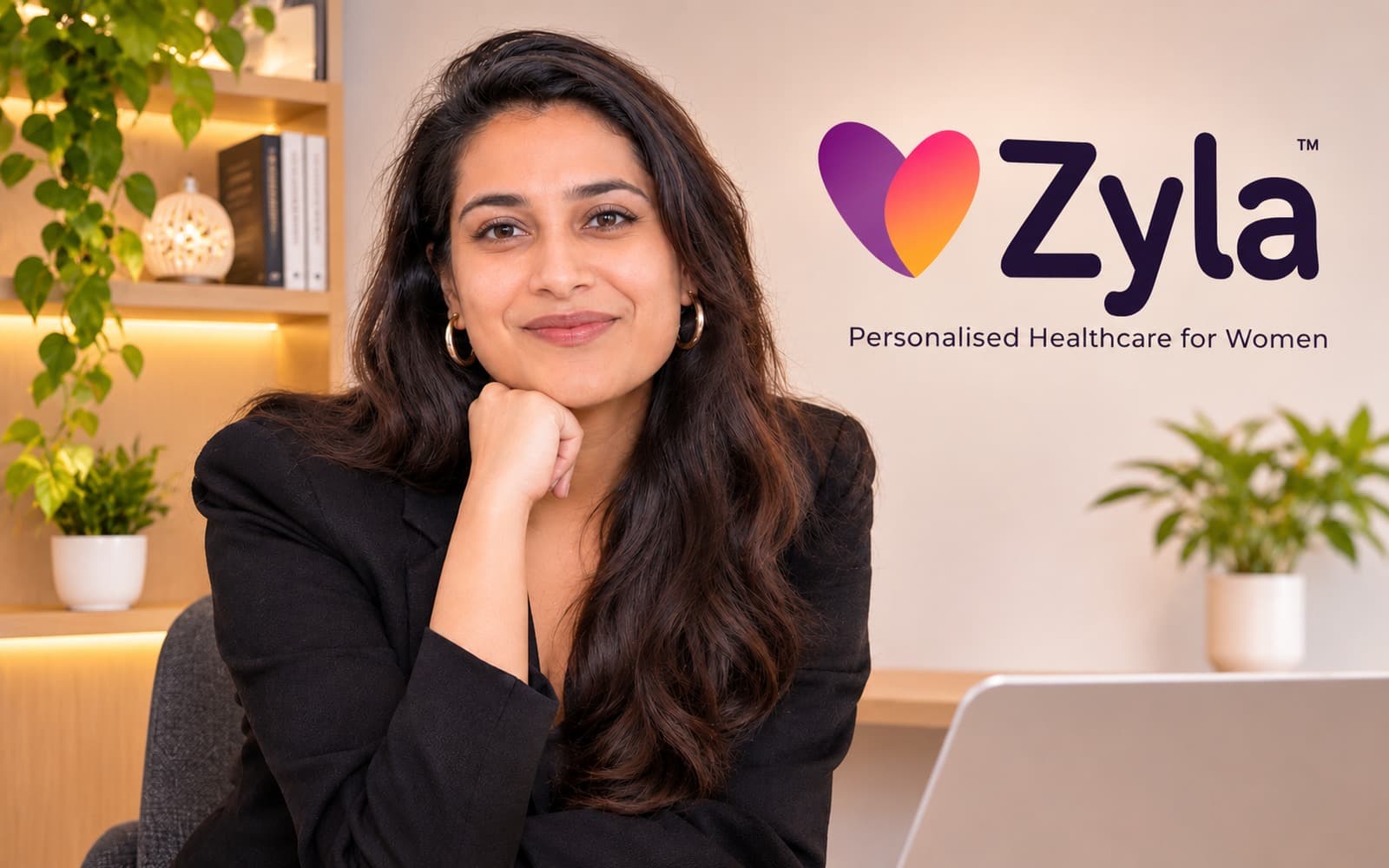
When her father experienced a cardiac emergency linked to diabetes, Khushboo Aggarwal confronted a problem that many Indian families understand: healthcare does not end when a patient leaves the hospital. Inspired by that experience, she founded Zyla Health in 2017 to make personalised, continuous healthcare support more accessible through technology.
In this story16 sections
- 1.1. Khushboo Aggarwal: A background in pharmacy, business and healthcare consulting
- 2.2. The family experience that revealed a healthcare gap
- 3.3. The decision to leave consulting and build Zyla
- 4.4. What does Zyla do? Making continuous healthcare possible
- 5.5. From a diabetes-focused app to a broader healthcare platform
- 6.6. The business model: Working with insurers, employers and pharmaceutical companies
- 7.7. Building the technology behind personalised care
- 8.8. Early traction and the importance of patient engagement
- 9.9. Winning partnerships with major companies
- 10.10. Raising investment to scale the business
- 11.11. The people behind Zyla: Building a founding and leadership team
- 12.12. What makes Zyla's approach different?
- 13.13. Challenges of building a health-tech startup in India
- 14.14. Zyla today: A wider vision for personalised healthcare
- 15.15. Lessons entrepreneurs can learn from Khushboo Aggarwal
- 16.Conclusion: Turning a family's healthcare struggle into a wider mission
A medical emergency can change the lives of an entire family. For Khushboo Aggarwal, it also revealed a gap in the Indian healthcare system that would eventually become the foundation of her entrepreneurial journey.
While working on a consulting assignment in California, Aggarwal received news that her father had suffered a cardiac event associated with his chronic diabetes. She faced a difficult journey back to India, including a period when she struggled to receive reliable updates about his condition. After returning, she spent the following months moving between work, home and hospital, helping her family manage his recovery.
The experience exposed a problem beyond the immediate emergency. Patients with chronic conditions such as diabetes need ongoing attention, lifestyle guidance, medication support and regular monitoring. Yet healthcare is often organised around individual consultations, diagnostic tests and hospital visits rather than continuous support between them.
Aggarwal began asking a fundamental question: who takes responsibility for helping patients stay healthier after they leave the hospital?
That question became the starting point for Zyla Health, a health-technology company founded in 2017. Its goal was to combine medical expertise, data and technology to help patients manage their health more proactively.
Zyla's journey is particularly relevant to India's growing health-tech sector because it addresses a challenge that affects not only patients but also caregivers, employers, insurers and pharmaceutical companies.
1. Khushboo Aggarwal: A background in pharmacy, business and healthcare consulting
Before becoming a health-tech entrepreneur, Khushboo Aggarwal built an academic and professional foundation in healthcare and business.
She studied Pharmacy (Honours) at the Birla Institute of Technology and Science (BITS) Pilani, graduating in 2009. She subsequently completed an MBA from the Indian Institute of Management Kozhikode in 2013.
Her professional experience included healthcare consulting roles with organisations such as Deloitte and Monitor Group. Through this work, she gained exposure to pharmaceutical companies, healthcare markets and patient-engagement programmes.
She also worked on projects in developed healthcare markets, including the United States, where she observed approaches that placed greater emphasis on patient outcomes and ongoing care.
This experience gave her an unusual combination of skills for a healthcare founder: an understanding of medicines and patient needs, business strategy, data analysis and the commercial realities of the healthcare industry.
It also helped her recognise the difference between providing a healthcare service and taking a more continuous approach to improving a patient's health.
2. The family experience that revealed a healthcare gap
The defining moment came when Aggarwal's father experienced a cardiac event triggered by complications associated with chronic diabetes.
At the time, she was in California on a consulting assignment. The distance, uncertainty and difficulty obtaining updates made the experience particularly stressful. After reaching India, she spent approximately six months balancing her professional responsibilities with her father's recovery and the family's healthcare needs.
What she observed was a lack of continuity.
Patients could consult doctors, purchase medicines and undergo diagnostic tests, but families often had to coordinate everything themselves. They were responsible for remembering appointments, following treatment instructions, encouraging lifestyle changes and recognising warning signs.
For a chronic patient, these everyday responsibilities can be as important as the hospital visit itself.
Aggarwal also noticed that healthcare systems in developed markets were increasingly discussing value-based care: a model that places emphasis on patient outcomes rather than simply the volume of services delivered.
In India, she felt there was a significant opportunity to build a more accountable and coordinated approach.
Her father's experience made this more than a theoretical business problem. It was something she had personally encountered as a family caregiver.
3. The decision to leave consulting and build Zyla
Aggarwal decided to move from advising healthcare businesses to building a solution herself.
In 2017, she founded Zyla in Delhi, initially operating from a small, one-room office. The original idea was to help people with chronic conditions manage their health through personalised guidance and continuous support.
The early focus was on diabetes, a condition that requires consistent monitoring and lifestyle management. However, the founders recognised that the underlying problem extended to other long-term health conditions too.
Zyla was designed around a simple but important principle: patients should not have to navigate the healthcare system alone between appointments.
The company aimed to bring together technology and human expertise, giving patients access to a coordinated care team rather than leaving them to manage every aspect of their treatment independently.
This was a shift in perspective. Instead of treating healthcare as a series of disconnected transactions, Zyla wanted to make it an ongoing relationship with the patient.
The idea also reflected Aggarwal's professional experience. Her understanding of healthcare consulting helped her identify the structural gap, while her personal experience showed her what that gap meant for families.
4. What does Zyla do? Making continuous healthcare possible
Zyla developed a technology-enabled care management platform that connects patients with personalised healthcare support.
Its model combines patient information, digital tools, medical expertise and ongoing communication. Depending on the programme, patients can receive support relating to:
-
Medication adherence and treatment routines
-
Nutrition and dietary changes
-
Physical activity and exercise
-
Physiotherapy and rehabilitation guidance
-
Health monitoring and follow-up
-
Access to doctors and healthcare professionals
-
Lifestyle interventions for chronic conditions
The company's approach is particularly relevant for people managing diabetes, heart-related risks, high blood pressure, cholesterol and other long-term health concerns.
Zyla has also expanded into programmes addressing women's health and other healthcare needs.
The important distinction is that the company does not position itself simply as a platform for booking a doctor or ordering a medicine. Its model is built around supporting patients over time and helping healthcare partners improve outcomes.
Its current business website describes the platform as combining human-assisted artificial intelligence with a care team. The company's medical AI engine, Athena, is designed to analyse patient information and help recommend personalised interventions to the care team.
5. From a diabetes-focused app to a broader healthcare platform
Zyla initially concentrated on diabetes management, but the business gradually expanded its scope.
The reason was straightforward: many patients experience more than one health condition. Someone living with diabetes may also need support with blood pressure, cholesterol, weight management or cardiovascular risk.
A programme that considers only one diagnosis may miss important aspects of a patient's overall health.
Zyla therefore developed a more integrated approach, bringing different health indicators and lifestyle factors into a personalised care plan.
Over time, its programmes expanded to include areas such as:
-
Diabetes and metabolic health
-
Heart health and cardiovascular risk
-
Blood pressure and cholesterol management
-
Kidney and liver health
-
Women's health concerns, including PCOS and thyroid-related support
-
Weight management and preventive wellness
This expansion helped the company move beyond its original consumer-facing app concept towards a broader care management platform.
The shift also created opportunities to work with organisations that wanted to support large populations of patients or employees rather than individual users alone.
6. The business model: Working with insurers, employers and pharmaceutical companies
One of Zyla's important strategic decisions was to build a business that could serve multiple participants in the healthcare ecosystem.
Rather than depending only on individual patients paying for an app subscription, the company developed a business-to-business-to-consumer (B2B2C) model.
Its three major business segments are:
Zyla for Insurance
Zyla works with insurance companies to provide care management programmes for policyholders. The objective is to identify high-risk individuals, support healthier behaviour and potentially reduce avoidable hospitalisation and claims costs.
Zyla for Corporates
The company offers employee health and wellness programmes to employers. These can include health assessments, personalised interventions and ongoing support for employees managing health risks.
Zyla for Pharma
Zyla works with pharmaceutical companies on patient-support programmes. These programmes can help patients understand their treatment, follow medication schedules and remain engaged with their care plans.
This model gives the company several potential sources of business while connecting its services to a wider healthcare network.
It also changes the commercial conversation. The value is not only whether a patient downloads an application, but whether a programme can improve health engagement, treatment adherence and outcomes for the organisation paying for the service.
7. Building the technology behind personalised care
Technology is central to Zyla's business model, but its approach combines automation with human healthcare professionals.
The company uses patient information and data analysis to help identify individual health needs and personalise interventions. Its platform can connect with different healthcare data sources, including partner systems, diagnostic providers and connected devices.
The company's AI engine, Athena, is described as analysing relationships between different patient data points and recommending interventions to its care team.
This is important because chronic disease management is rarely based on a single number. A patient's health may be influenced by medication adherence, nutrition, physical activity, medical history, test results and other factors.
A technology platform can help organise these inputs and identify patterns, while doctors and other qualified professionals remain important to clinical decisions and patient support.
Google for Startups featured Zyla as an Indian health-tech founder story. Aggarwal participated in its Female Founders bootcamp in 2019 and later joined its Women Founders Immersion programme. The company used Google mentorship to strengthen its technology development and improve its understanding of the patient journey.
This support was particularly relevant as Zyla worked to develop machine-learning capabilities and scale its care management platform.
8. Early traction and the importance of patient engagement
For a healthcare technology company, adoption is only the first milestone. Patients must continue engaging with the platform and following the guidance they receive.
Zyla's early growth came from its focus on chronic conditions, where continuous support can be particularly valuable.
The company expanded its reach through doctors, partnerships and digital access. A YourStory company profile reported that Zyla had reached more than 150,000 patient lives across over 595 cities in India at the time of its profile.
During the COVID-19 pandemic, the company also introduced a COVID Home Recovery Plan in April 2021. It was a 15-day programme offering consultations with specialist doctors, nutritionists, physiotherapists and stress or anxiety counsellors, alongside round-the-clock chat support.
This initiative demonstrated how a care management model could be adapted to an urgent public health situation. It also reflected the company's broader approach: combining different types of healthcare expertise around the patient's needs.
These are historical company-reported figures and milestones, not a statement of Zyla's current active patient count.
9. Winning partnerships with major companies
As Zyla developed its platform, it began working with established organisations across insurance, pharmaceuticals and corporate services.
By 2023, its reported client portfolio included companies such as:
-
Max Life Insurance
-
HDFC ERGO
-
Pfizer
-
Zydus
-
IBM
-
DHL
-
Godrej
-
GEP
These partnerships represented an important stage in the company's development.
Working with large organisations requires more than a functioning app. A health-tech provider must demonstrate operational reliability, data security, the ability to integrate with existing systems and the capacity to serve large groups of people.
For Zyla, these relationships also supported its broader ambition to make personalised care available through multiple parts of the healthcare ecosystem.
The company's proposition was increasingly about helping insurers manage risk, employers improve workforce health and pharmaceutical companies support patients throughout their treatment journeys.
10. Raising investment to scale the business
Building healthcare technology requires capital. Product development, medical expertise, technology infrastructure, partnerships and customer acquisition all demand sustained investment.
Zyla attracted early backing from investors including Kae Capital and Secocha Ventures.
In July 2022, the company raised approximately $1 million in a pre-Series A funding round. The funding was intended to support product development and expansion of its care management model.
The next major milestone came in November 2023, when Zyla raised $4 million in a Series A round led by Exfinity Venture Partners.
The round also included participation from Sony Innovation Fund, Venture Catalysts and Aureolis, among others.
The company said it would use the investment to expand its insurance, corporate and pharmaceutical business verticals and strengthen integrations across the healthcare ecosystem.
The funding was a significant validation of the opportunity Zyla was pursuing: technology-enabled care management that could connect patient outcomes with the commercial needs of healthcare organisations.
Based on the publicly reported $1 million and $4 million rounds, Zyla had raised approximately $5 million in these disclosed rounds by November 2023.
11. The people behind Zyla: Building a founding and leadership team
Although Khushboo Aggarwal is the public face of Zyla's founding story, the company has also evolved through contributions from other founders and technology leaders.
The company was started in 2017 by Khushboo Aggarwal and Tanmay Patil. According to a founder interview recorded on Invstt, Patil left the business in 2019 due to health reasons.
Aishwary Bhaskar, who had played a significant role in building Zyla's technology function, was elevated to the founder role in 2022. He is also identified as the company's co-founder and CTO in investor portfolio profiles.
This evolution highlights the importance of technical leadership in a health-tech business. A company built around personalised care needs not only clinical understanding and business strategy but also a robust technology platform capable of handling complex information and integrations.
Aggarwal's background in pharmacy, consulting and business, combined with the technology team's capabilities, helped Zyla develop its position as a care management platform rather than simply a digital health information service.
12. What makes Zyla's approach different?
Zyla's business model is built around a shift from episodic healthcare to continuous care.
Traditional healthcare often focuses on a consultation, diagnosis, prescription or hospital visit. These services remain essential, but patients with chronic conditions also need support between medical appointments.
Zyla attempts to address that gap through several connected elements.
Personalised care: Its programmes are designed around individual health information and needs rather than relying only on generic wellness advice.
Continuous engagement: Patients can receive ongoing guidance and follow-up instead of relying entirely on occasional consultations.
Human-assisted technology: AI and data analysis support the care process, while healthcare professionals remain involved in patient guidance and intervention.
Multiple healthcare partners: Its insurance, corporate and pharmaceutical verticals allow the platform to reach patients through different organisations.
Focus on outcomes: The business aims to connect healthcare interventions with measurable improvements in health and potential cost savings.
This combination is what distinguishes Zyla's proposition from a conventional telemedicine or appointment-booking platform.
13. Challenges of building a health-tech startup in India
Zyla's growth also illustrates the difficulties of building a technology business in a highly regulated and complex industry.
Building patient trust
Health information is personal. Patients need confidence that their information is handled responsibly and that the advice they receive comes from qualified professionals.
Changing patient behaviour
Technology cannot improve health outcomes simply by being downloaded. Patients must engage with their programmes, follow appropriate treatment plans and maintain healthier routines.
Integrating a fragmented healthcare ecosystem
Hospitals, insurers, laboratories, pharmacies and employers often use different systems. Connecting these organisations requires technical integrations and strong working relationships.
Balancing technology with human care
Automation can make care more scalable, but healthcare decisions require professional judgement. The company must maintain the right balance between AI-assisted insights and human oversight.
Demonstrating measurable outcomes
Healthcare partners need evidence that care management programmes improve patient engagement, health outcomes or costs. This requires reliable measurement and credible reporting.
Scaling across diverse populations
India's healthcare needs vary by region, language, income, access to doctors and digital literacy. Delivering care across this diversity requires adaptable programmes and local understanding.
Aggarwal's experience in healthcare consulting helped her recognise these structural challenges, but building a company to address them required a different set of capabilities: technology execution, team building, partnerships and sustained operational discipline.
14. Zyla today: A wider vision for personalised healthcare
Zyla's current positioning extends beyond its original diabetes-focused offering.
Its official website describes the company as a personalised care management platform serving insurance companies, employers and pharmaceutical businesses.
The company reports that its platform has impacted more than 500,000 lives, addressed over 10 million patient queries, and supports care delivery in more than 12 languages. It also highlights its human-assisted AI model, including the Athena medical AI engine.
These are figures published by the company and should be understood as company-reported metrics rather than independently audited performance data.
The company's stated ambition is to make personalised healthcare more accessible in every household by combining data, technology and compassionate human support.
The larger opportunity lies in helping healthcare organisations move from treating illness only when it becomes urgent towards identifying risks earlier and supporting patients throughout their health journey.
15. Lessons entrepreneurs can learn from Khushboo Aggarwal
Khushboo Aggarwal's journey offers important lessons for founders building businesses in healthcare, technology and other complex industries.
1. Personal problems can reveal large market opportunities.
Zyla began with a family healthcare experience. Aggarwal recognised that the difficulties her family faced were not isolated incidents but reflected a wider gap in chronic care management.
2. Industry knowledge can become an entrepreneurial advantage.
Her background in pharmacy, business and healthcare consulting helped her understand the commercial and operational challenges behind the problem she wanted to solve.
3. Solve the problem beyond the first transaction.
Healthcare does not end with a doctor's appointment. Zyla's continuous-care model demonstrates the opportunity to support customers throughout their journey, rather than focusing only on individual services.
4. Build technology around real human needs.
AI and data analysis are valuable when they help healthcare professionals make better-informed decisions and deliver more personalised support. Technology should strengthen care, not replace clinical judgement.
5. Find business models that support long-term growth.
By working with insurers, employers and pharmaceutical companies, Zyla developed a business model that could reach patients through established healthcare organisations.
6. Build a team with complementary expertise.
Healthcare technology requires multiple capabilities. Clinical understanding, technology development, business strategy and operational execution all play important roles.
Conclusion: Turning a family's healthcare struggle into a wider mission
Khushboo Aggarwal's journey from healthcare consultant to health-tech entrepreneur began with an experience that changed how she understood patient care.
When her father experienced a cardiac emergency associated with diabetes, she saw how difficult it could be for families to manage a chronic condition beyond the hospital. The experience exposed a gap between receiving medical treatment and getting the continuous support needed to manage health over time.
Instead of returning to consulting, Aggarwal decided to work on the problem herself. She founded Zyla in 2017 with the ambition of making healthcare more personalised, connected and accessible.
Over time, the company expanded from a diabetes-focused platform into a broader care management business serving insurers, employers and pharmaceutical companies. Its fundraising journey, enterprise partnerships and investment in AI-assisted care reflect the growing role of technology in India's healthcare ecosystem.
Zyla's story is not simply about building another health application. It is about rethinking how healthcare support can reach patients between medical appointments—and how technology can help families feel less alone when managing long-term health conditions.
For aspiring entrepreneurs, Aggarwal's journey offers a powerful lesson: sometimes the most meaningful business ideas come from problems experienced personally, but building a lasting company requires turning that experience into a solution that can help thousands of others.
More Health & Wellness stories

Radhika Iyer Talati – Anahata: How a Personal Journey Towards Holistic Living Inspired an Organic Wellness Business
After two cancer diagnoses and a life-changing period in the Himalayas, Radhika Iyer Talati developed a deeper interest in yoga, naturopathy and traditional Indian wellness practices. She eventually turned that personal exploration into Anahata Organic, a business built around handcrafted products, local sourcing and a more conscious approach to everyday living.
Read story
Smita Satiani – Alaya Tea: How an Indian-American Entrepreneur Is Bringing India's Tea Heritage to the Modern American Market
Smita Satiani, Alaya Tea, Indian-American entrepreneurs, Indian tea brands in USA, sustainable tea business, women entrepreneurs, regenerative agriculture, Indian-origin founders.
Read story
Elixir Wellness: How Tanya Khubchandani Vatsa Is Bringing Preventive Healthcare and Medical Wellness to India
Educated in the United States and shaped by experience inside major New York healthcare institutions, Tanya Khubchandani Vatsa returned to India with a different perspective on healthcare. Her venture, Elixir Wellness, is built around a growing idea: wellbeing should not begin only when someone falls ill.
Read story