
From Family Recipes to American Retail: How Chitra Agrawal Built Brooklyn Delhi
Discover how Chitra Agrawal transformed her passion for Indian home cooking into Brooklyn Delhi, a food brand bringing traditional Indian flavours, achaar, and innovative condiments to American kitchens. Explore her entrepreneurial journey, brand-building strategy, and lessons for aspiring founders.
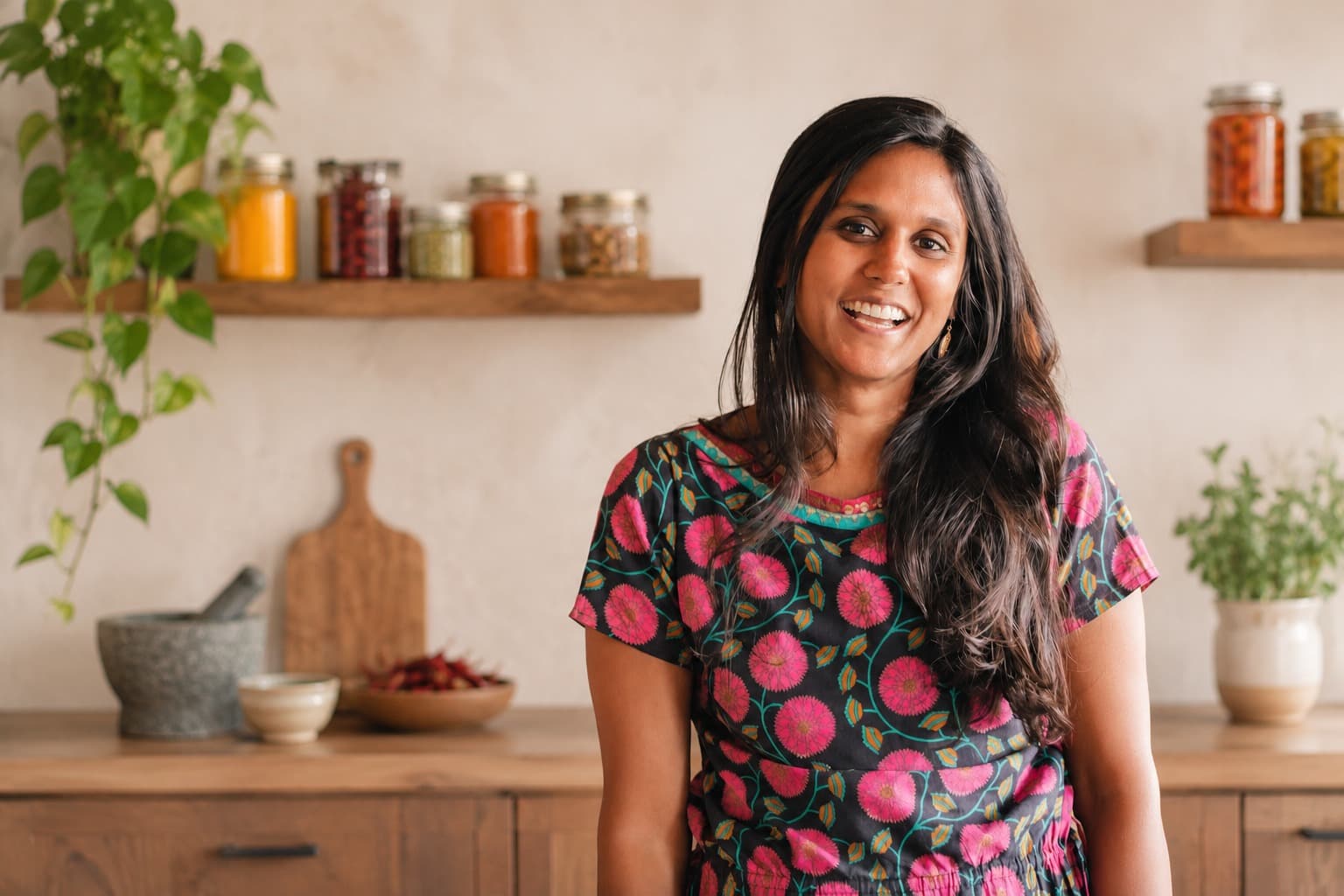
In this story19 sections
- 1.In This Story
- 2.1. Growing Up Between Two Cultures
- 3.2. How a Food Blog Became the Starting Point
- 4.3. From Home Cooking to a Cookbook
- 5.4. Identifying an Opportunity in the American Food Market
- 6.5. Launching Brooklyn Delhi in 2014
- 7.6. The Challenge of Introducing Achaar to New Customers
- 8.7. Building Distribution Through Sampling and Partnerships
- 9.8. Growing the Business Without Losing Its Identity
- 10.9. Business Lessons for Food and E-commerce Entrepreneurs
- Lesson 1: Start with a genuine customer or personal insight
- Lesson 2: Use content to build expertise and discover demand
- Lesson 3: Explain unfamiliar products through familiar use cases
- Lesson 4: Treat sampling and customer education as part of the business model
- Lesson 5: Build distribution around the customer journey
- Lesson 6: Grow at a pace that supports product quality
- Lesson 7: Expand without losing the original proposition
- Lesson 8: Build a business, not just a popular product
- 11.10. The Takeaway: Building a Business From Identity, Insight, and Persistence
Food can connect generations, preserve cultural traditions, and introduce people to unfamiliar experiences. For Chitra Agrawal, it also became the foundation of an entrepreneurial journey that brought Indian flavours into American grocery stores.
Growing up in New Jersey as the daughter of Indian immigrants, Agrawal experienced two cultural worlds. Her life outside the home was shaped by American culture, while Indian traditions, family recipes, and home cooking remained central to her family's identity. Over time, food became a way for her to understand her heritage and share it with a wider audience.
What began as a personal project documenting family recipes eventually developed into something much bigger.
In 2009, Agrawal started a food blog called The ABCDs of Cooking, using it to record traditional recipes, experiment with ingredients, and explore her identity as an Indian-American. The project led to cooking classes, collaborative pop-up dinners, and eventually a cookbook.
In 2014, she and her husband, Ben Garthus, launched Brooklyn Delhi, a consumer food brand built around Indian condiments and pantry staples. Their first product was achaar, a traditional South Asian pickle and condiment that was relatively unfamiliar to many mainstream American grocery shoppers.
Introducing the product required more than preparing good food. The founders had to explain what achaar was, demonstrate how people could use it, establish retail relationships, and convince customers to try something new.
Brooklyn Delhi gradually moved from small-batch production and local markets towards wider retail distribution. Its journey illustrates how a founder can turn cultural knowledge into a commercial opportunity by combining product development, customer education, thoughtful branding, and patience.
For entrepreneurs building food, lifestyle, and direct-to-consumer businesses, Agrawal's story offers valuable lessons about finding a niche, creating demand, and growing without losing sight of the original idea.
Sources: Brooklyn Delhi's official story and U.S. Chamber of Commerce's business profile.
In This Story
-
Growing Up Between Two Cultures
-
How a Food Blog Became the Starting Point
-
From Home Cooking to a Cookbook
-
Identifying an Opportunity in the American Food Market
-
Launching Brooklyn Delhi in 2014
-
The Challenge of Introducing Achaar to New Customers
-
Building Distribution Through Sampling and Partnerships
-
Growing the Business Without Losing Its Identity
-
Business Lessons for Food and E-commerce Entrepreneurs
-
The Takeaway
1. Growing Up Between Two Cultures
Chitra Agrawal's entrepreneurial journey began long before Brooklyn Delhi became a business.
Her parents left India in 1967 in pursuit of opportunities in the United States. They built their lives in America while maintaining a strong connection to their Indian heritage, with food playing an important role in the family's everyday life.
Agrawal grew up in New Jersey, where Indian food and traditions provided a connection to her family's background. Her parents introduced her to different regional cooking traditions, giving her an appreciation for the variety within Indian cuisine.
Her mother brought influences from Karnataka and southern India, while her father introduced dishes associated with northern India, including breads, curries, and other home-cooked meals.
Family cooking was more than a practical part of daily life. It was a way of preserving memories, passing down knowledge, and maintaining relationships with relatives in India.
Visiting India also helped Agrawal understand the stories behind the food. Markets, family kitchens, and conversations with older relatives gave her opportunities to learn recipes and discover the cultural significance of particular dishes.
However, growing up between two cultures also raised questions about identity and belonging.
Rather than treating her Indian and American experiences as separate, Agrawal gradually began exploring how they could coexist. Food became the medium through which she could express that combination.
This perspective would eventually influence the identity of Brooklyn Delhi.
The future business would not simply reproduce traditional Indian products or adapt everything to conventional American tastes. Instead, it would explore the space between those approaches, introducing Indian flavours in formats that could work across different kitchens and eating habits.
For founders serving diaspora communities, this is an important starting point: personal experiences can reveal unmet needs that larger businesses may overlook.
2. How a Food Blog Became the Starting Point
In 2009, while living in Brooklyn, Agrawal began documenting family recipes through a blog called The ABCDs of Cooking.
The name reflected the experience of being American-born with South Asian roots, while the blog gave her a place to explore that identity through cooking.
Initially, the project centred on recording recipes and sharing the food she had grown up eating. As her interests developed, she began experimenting with local produce, incorporating influences from other cuisines, and creating dishes that reflected her own experiences.
The blog also connected her with Brooklyn's growing food community.
She began teaching cooking classes, working with local farmers and chefs, and organising pop-up dinners. These experiences allowed her to share her food with people outside her immediate circle and observe how they responded to unfamiliar flavours.
This stage of her journey mattered because it brought together three elements that would later support her business.
First, she developed product knowledge. Cooking regularly, researching recipes, and experimenting with ingredients helped her understand flavour combinations and how traditional dishes could be adapted for different uses.
Second, she built an audience. The blog and food events created opportunities to connect with people interested in her approach to Indian cooking.
Third, she gained practical customer feedback. Cooking classes and pop-up dinners gave her opportunities to see which dishes people enjoyed, what questions they asked, and how they responded to new combinations.
The blog was not originally created as a formal business plan. Nevertheless, it became a foundation for the work that followed.
Agrawal's experience demonstrates how a content project can become more than a marketing channel. When it develops around a founder's genuine expertise, it can help build credibility, test ideas, and reveal potential commercial opportunities.
For modern entrepreneurs, the equivalent might be a recipe website, YouTube channel, specialist newsletter, or social media account that gradually attracts an audience around a clearly defined subject.
3. From Home Cooking to a Cookbook
As Agrawal's food-related activities expanded, her work moved beyond blogging.
She was teaching classes, collaborating with other food professionals, and participating in pop-up dinners across New York. These experiences helped her develop a distinctive approach to cooking that combined Indian traditions with ingredients, techniques, and influences from her surroundings.
Her work eventually led to a cookbook deal.
Published in 2017, Vibrant India: Fresh Vegetarian Recipes from Bangalore to Brooklyn brought together recipes inspired by Indian cooking and Agrawal's experiences in the United States.
The book was an important milestone because it turned years of personal exploration into a more formal body of work.
It also helped demonstrate that her interest in food could support a professional career rather than remain a personal hobby.
For Agrawal, the cookbook was part of a broader progression: documenting recipes led to cooking classes, cooking classes led to collaborations, and those experiences helped establish the foundation for a consumer food business.
The journey did not follow a conventional startup sequence. There was no need to begin with a large product catalogue or an extensive retail strategy. Instead, the opportunity emerged gradually as she developed her knowledge, shared her work, and discovered how her approach could serve a wider audience.
The cookbook also helped articulate the perspective behind her food: Indian cuisine could be rooted in tradition while remaining open to experimentation.
That same philosophy would become central to Brooklyn Delhi's product development.
Source: U.S. Chamber of Commerce — Brooklyn Delhi's business journey.
4. Identifying an Opportunity in the American Food Market
By the time Agrawal began considering a packaged food business, she had already spent years working with recipes, customers, chefs, and local food producers.
She recognised an opportunity to introduce Indian pantry staples to consumers who might not have encountered them in their everyday grocery shopping.
One product stood out: achaar.
Achaar is a traditional South Asian condiment made using ingredients such as fruit or vegetables, spices, and oil. It can provide acidity, heat, depth, and complexity to a meal.
Although achaar is familiar in many Indian households, it was less established as a mainstream packaged condiment in the American market.
That presented both an opportunity and a challenge.
A product that customers already understand can be relatively straightforward to market. A product that requires explanation demands more work. Consumers must understand what it is, how it tastes, and why they might want to buy it.
Agrawal saw potential in making Indian flavours accessible beyond the traditional settings in which they were usually consumed.
Achaar did not have to be limited to Indian meals. It could also work as a sandwich spread, a flavourful addition to a burger, or an accompaniment to eggs and other familiar dishes.
This expanded the potential audience beyond people actively searching for Indian groceries.
The business opportunity was therefore not simply to sell an existing condiment to people who already knew it. It was to help new customers discover a different way to use it.
That distinction shaped the product's positioning and the way the founders approached marketing.
Rather than abandoning the condiment's cultural identity, they could explain its versatility through familiar foods and everyday cooking occasions.
The lesson is relevant to any founder introducing a specialised product to a new market: understanding the product's traditional use is important, but identifying additional use cases can help broaden its appeal.
5. Launching Brooklyn Delhi in 2014
In 2014, Agrawal and her husband, Ben Garthus, launched Brooklyn Delhi.
The name brought together two places that represented important parts of their lives and the business's identity.
Brooklyn reflected where the founders were building their lives and developing their food venture. Delhi represented a connection to Indian heritage, particularly Agrawal's family background.
The brand was built around a clear idea: Indian flavours could be presented in a contemporary way without losing their cultural identity.
Their first product was tomato achaar, which they initially made by hand in small batches.
Instead of immediately pursuing large-scale distribution, the founders began selling at local markets around New York City. This allowed them to introduce the product directly to customers and learn from their reactions.
The early operating model was deliberately small. The business could concentrate on recipe development, product quality, packaging, and customer feedback before taking on the complexity of wider distribution.
Garthus's experience in packaging design complemented Agrawal's work on recipes and flavours. The division of responsibilities allowed the founders to bring together food expertise and consumer-product presentation.
Brooklyn Delhi also started as a self-funded business. Agrawal continued working in marketing and writing for several years after the company's launch, allowing the venture to develop without immediately relying on outside investment.
This approach required patience. Building a packaged food business involves more than producing something customers enjoy. The company also needs reliable production, appropriate packaging, retail relationships, marketing, and sufficient financial resources to meet demand.
The founders chose to develop the business gradually rather than expand at any cost.
Their experience highlights the value of testing a product in a manageable setting before committing to a larger commercial operation.
For early-stage founders, local markets and direct customer interactions can provide useful feedback while keeping the initial business model relatively simple.
6. The Challenge of Introducing Achaar to New Customers
One of Brooklyn Delhi's biggest challenges was helping consumers understand achaar.
In South Asian households, the condiment has a familiar place at the table. For many American shoppers, however, it was a relatively unfamiliar category.
The founders therefore needed to communicate more than the ingredients or taste.
They had to explain what achaar was, how it differed from other condiments, and how customers could incorporate it into their existing meals.
This required a different marketing approach from simply advertising a recognisable grocery product.
Product sampling became particularly important.
When shoppers could taste the condiment, they had an immediate way to evaluate its flavour and imagine how it might fit into their cooking. Direct demonstrations also created opportunities for the founders to answer questions and suggest uses.
The product's versatility became a useful part of the explanation.
Rather than positioning achaar exclusively as something to eat with traditional Indian dishes, the founders encouraged customers to experiment with sandwiches, burgers, eggs, and other familiar foods.
This helped bridge the gap between a culturally specific product and a broader audience.
However, customer education takes time and money. Retailers may be willing to stock a product, but that does not automatically mean shoppers understand it or will purchase it repeatedly.
Agrawal's experience illustrates an important distinction between distribution and demand.
Getting a product onto a shelf is one milestone. Giving customers enough knowledge and confidence to buy it is another.
For businesses introducing unfamiliar products, the marketing strategy must account for both.
That may mean investing in demonstrations, recipes, educational content, social media, packaging instructions, and partnerships that allow customers to experience the product before committing to a purchase.
7. Building Distribution Through Sampling and Partnerships
As Brooklyn Delhi developed its customer base, the founders began exploring ways to reach consumers beyond local markets.
One important development came through Blue Apron in 2018.
The meal-kit company expressed interest in incorporating Brooklyn Delhi's tomato achaar into its recipes. The condiment could appear alongside dishes beyond traditional Indian meals, allowing customers to discover it through a cooking experience they were already purchasing.
This provided exposure to a wider audience and showed how a complementary product partnership could introduce an unfamiliar food to potential customers.
The arrangement also addressed a practical marketing challenge: people could try the product while using it in a meal, rather than needing to understand it from a retail shelf alone.
Around the same period, Brooklyn Delhi secured further opportunities with Whole Foods Market. Its products subsequently expanded into wider grocery distribution.
The U.S. Chamber of Commerce has reported on the company's development from local markets to major retail partners, including Target and other grocery chains. Exact distribution figures and product availability can change over time, so current listings should be checked before publication.
These developments illustrate the role that partnerships can play in consumer-brand growth.
A company does not always need to reach every customer through its own website or social media channels. It can also grow through retailers, meal-kit providers, food-service businesses, and other organisations that already have established customer relationships.
However, the right partnership must do more than create visibility. It should give customers a meaningful opportunity to discover, try, and purchase the product.
For Brooklyn Delhi, the combination of direct customer interaction, sampling, and commercial partnerships helped make an unfamiliar condiment more accessible.
The broader lesson is that distribution works best when it is supported by customer education and a clear reason for people to return to the product.
8. Growing the Business Without Losing Its Identity
As Brooklyn Delhi developed, its product offering expanded beyond its original achaar.
The brand's range has included additional condiments, sauces, and convenient meal products inspired by Indian flavours.
This expansion allowed the business to serve different cooking occasions.
Achaar could introduce a distinctive flavour to an existing dish. Simmer sauces could help customers prepare meals more conveniently. Ready-to-eat or heat-and-eat products could offer another way to incorporate Indian-inspired flavours into everyday routines.
The broader range also reflected a practical understanding of customer behaviour.
A consumer who discovers a brand through one product may eventually become interested in other products that solve related needs. The challenge is to expand in ways that remain connected to the brand's original purpose.
Brooklyn Delhi's stated approach centres on recipes rooted in tradition but open to innovation, with an emphasis on Indian flavours and versatile uses.
This balance matters when a business serves more than one audience.
Customers familiar with Indian cuisine may value cultural authenticity, regional influences, and distinctive flavours. Customers encountering the cuisine for the first time may need guidance, convenient formats, or suggestions for incorporating the products into meals they already prepare.
The brand's positioning creates room for both groups without requiring the founders to treat them as identical customers.
Its identity also reflects the complementary roles of the founders. Agrawal continues to develop the recipes, while Garthus contributes to packaging design, connecting the product's culinary character with its visual presentation.
For consumer brands, this coordination between product and presentation is important. Packaging can attract attention, but the product must deliver an experience that supports repeat purchases.
Long-term growth depends on maintaining that connection as the business expands.
9. Business Lessons for Food and E-commerce Entrepreneurs
Brooklyn Delhi's journey offers several practical lessons for entrepreneurs, particularly those building consumer brands around a specialised product.
Lesson 1: Start with a genuine customer or personal insight
Agrawal's work began with family recipes and a desire to explore her Indian-American identity. The business opportunity developed from that foundation rather than from an unrelated trend.
Founders can use their own experiences to identify products, services, or customer problems that deserve closer attention.
However, personal interest is only a starting point. It must eventually be supported by customer feedback and evidence of demand.
Lesson 2: Use content to build expertise and discover demand
The ABCDs of Cooking blog helped Agrawal document her work, share recipes, and connect with a wider food community.
For modern businesses, content can serve similar purposes. A brand selling skincare might publish educational guides, while a food company might develop recipes and cooking tutorials.
Useful content can attract an audience before that audience is ready to purchase. It can also help founders understand which subjects, problems, and products generate the most interest.
Lesson 3: Explain unfamiliar products through familiar use cases
Achaar presented a marketing challenge because many American shoppers did not already understand it.
Showing how it could be used in sandwiches, burgers, and other familiar foods made the product easier to understand.
Entrepreneurs entering a new market should consider what their target customers already know. Demonstrating how a product fits into existing habits can be more effective than relying on technical descriptions alone.
Lesson 4: Treat sampling and customer education as part of the business model
For Brooklyn Delhi, tasting the product helped customers understand its appeal.
Other businesses can apply the same principle through product demonstrations, trials, tutorials, free samples, consultations, or introductory offers.
The right method depends on the product, but the objective remains the same: reduce uncertainty and help customers make informed purchasing decisions.
Lesson 5: Build distribution around the customer journey
Retail partnerships and meal-kit collaborations helped Brooklyn Delhi reach people who might not have discovered the brand independently.
For e-commerce entrepreneurs, the equivalent might be partnerships with complementary brands, specialist retailers, marketplaces, creators, or subscription services.
The important question is not simply where a product can be listed, but where its target customers are most likely to discover and try it.
Lesson 6: Grow at a pace that supports product quality
Brooklyn Delhi's founders chose to self-fund the business and develop it gradually.
That approach allowed them to retain control over their product and brand decisions, although it also meant accepting the operational and financial constraints associated with slower growth.
Self-funding is not necessarily the right choice for every business. Nevertheless, founders should understand the trade-offs between rapid expansion, financial risk, operational capacity, and control.
Lesson 7: Expand without losing the original proposition
Brooklyn Delhi developed products beyond its original achaar, but its offering remained connected to Indian flavours and convenient everyday cooking.
When expanding a catalogue, businesses should identify which customer needs the new products serve and how they reinforce the brand's positioning.
Growth is more sustainable when new offerings make sense to existing customers while providing a reason for new customers to discover the brand.
Lesson 8: Build a business, not just a popular product
A product may receive positive feedback and attract initial attention, but a consumer business also needs dependable production, suitable packaging, customer acquisition, distribution, and repeat purchases.
Brooklyn Delhi's experience shows why entrepreneurs must think beyond the first sale.
The long-term challenge is to create a system that consistently delivers a product customers understand, value, and want to purchase again.
10. The Takeaway: Building a Business From Identity, Insight, and Persistence
Chitra Agrawal's journey from a personal food blog to Brooklyn Delhi demonstrates how an entrepreneurial opportunity can emerge from everyday experiences.
Family recipes inspired her initial exploration. Blogging gave her a way to document and share that work. Cooking classes, pop-up dinners, and a cookbook helped develop her expertise and connect her with an audience.
The launch of Brooklyn Delhi in 2014 transformed those experiences into a commercial venture.
The founders introduced achaar to consumers who were often unfamiliar with the product, built awareness through sampling and education, and developed partnerships that helped expand distribution.
The business also illustrates that growth does not always begin with a large investment or an extensive product range. In some cases, a clear point of view, a useful product, and a willingness to learn from customers can provide a foundation for a more ambitious business.
For aspiring entrepreneurs, the most important lesson is not to copy Brooklyn Delhi's exact product or marketing strategy. It is to understand how the founders connected their personal knowledge to a real market opportunity.
Agrawal combined cultural heritage with contemporary consumer needs, while Garthus's design expertise helped translate that vision into a consumer brand.
Their experience highlights the importance of product differentiation, customer education, thoughtful partnerships, and patience when introducing something new.
Ultimately, Brooklyn Delhi's story is about more than bringing Indian condiments to American grocery stores. It is about turning a personal connection to food into a business that helps more people discover and experience those flavours.
For founders building the next generation of food, lifestyle, and e-commerce brands, that is a valuable reminder: a strong business can begin with something deeply familiar, provided there is a thoughtful way to make it meaningful to a much wider audience.
More Food & Beverage stories

From a Consumer Problem to a Premium D2C Brand: How Aishwarya Iyer Built Brightland
Discover how Aishwarya Iyer transformed her passion for quality ingredients into Brightland, a premium olive oil brand combining California sourcing, transparent production, and distinctive packaging to redefine everyday kitchen essentials.
Read story
From a Small Kitchen to a Leading Fresh-Food Brand: The Success Story of Musthafa PC and iD Fresh Food
Discover how Musthafa PC and his cousins built iD Fresh Food from a small Bengaluru kitchen into a recognised fresh-food brand, overcoming early setbacks through product innovation, quality, and a deep understanding of everyday Indian food habits.
Read story
Pamreiwon Shokwungnao: From Her Parents’ Small Hotel to Building Two Food Brands in Manipur
Discover how Manipur entrepreneur Pamreiwon Shokwungnao turned her passion for food into two growing brands, Warm Delights and Garden of Eden. From baking pastries in Ukhrul to creating herbal teas using locally sourced ingredients, her journey highlights perseverance, innovation and the power of women-led entrepreneurship.
Read story