
Shreya Patel: From India to America – Building RAAS Through Indian Craftsmanship and Contemporary Fashion
How an immigrant entrepreneur turned a lifelong passion for fashion into a Chicago-based label, bringing Indian artistry to the American fashion market while building a business around ethical production and traditional craftsmanship.
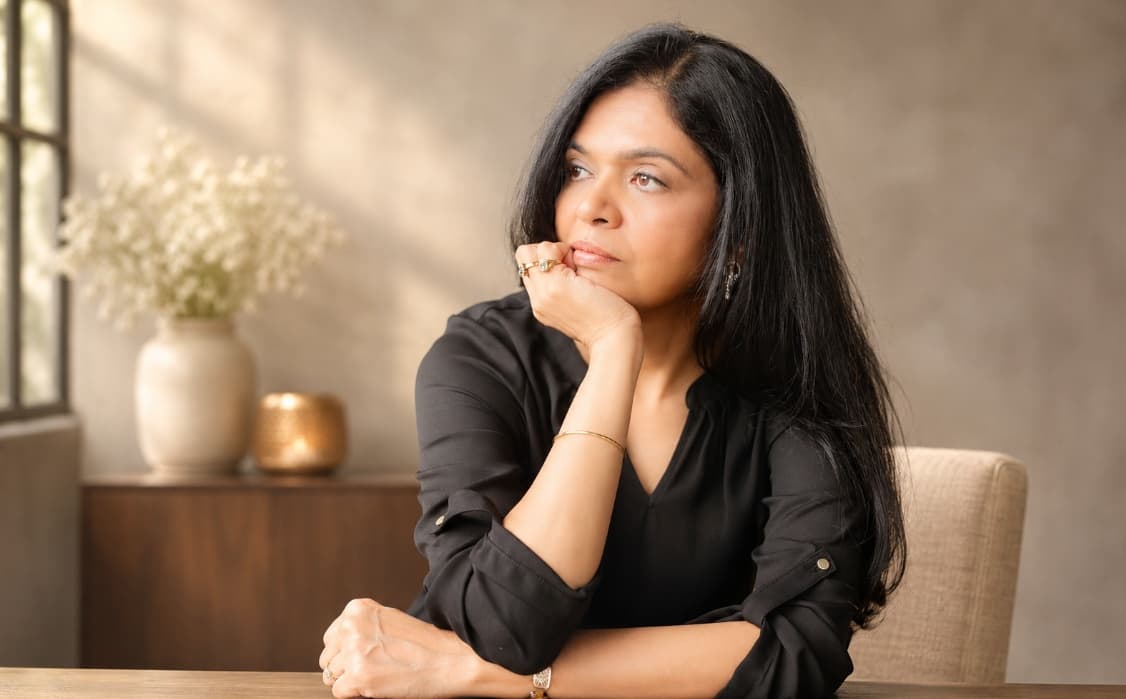
In this story13 sections
- 1.1. A New Beginning in America
- 2.2. The Idea Behind RAAS
- 3.3. Building a Fashion Business in Chicago
- 4.4. Why Ethical Manufacturing Became Personal
- 5.5. Bringing Indian Craftsmanship into Contemporary Fashion
- 6.6. A Family Journey: Axi Patel Joins the Business
- 7.7. Taking Indian Fashion to New York Fashion Week
- 8.8. Making Indian Occasionwear More Accessible to American Customers
- 9.9. The RAAS Philosophy: Fashion with a Purpose
- 10.10. The Challenges of Starting a Second Career at 51
- 11.11. What Entrepreneurs Can Learn from Shreya Patel's Journey
- 12.The Bigger Story: An Indian Heritage, an American Dream
- 13.The Bigger Story: An Indian Heritage, an American Dream
Moving to a new country often means starting over. For some people, it means rebuilding a career, discovering a new identity, or finding a different way to pursue a lifelong dream. For Shreya Patel, moving from India to the United States became the beginning of an unexpected second career.
At 51, after nearly two decades working as a financial analyst, Patel decided to pursue her passion for fashion. She went on to establish RAAS – The Global Naari, a Chicago-based fashion label that brings together Indian craftsmanship, contemporary silhouettes and a commitment to more responsible production.
Her journey is not simply about building another ethnic fashion brand. It is about taking the skills and traditions of Indian artisans to an international audience, while rethinking how fashion can create value for the people behind every garment.
This is the story of how Shreya Patel turned a personal passion into a fashion business with a purpose.
1. A New Beginning in America
Shreya Patel was born and raised in India. Before entering the fashion industry, she built a professional career in finance, earning a degree in Statistics and working as a financial analyst for almost 20 years. She also helped manage her husband's eye clinic.
In 2016, Patel moved to the United States with her family to support her children's education. The move brought a major change in her personal and professional life.
Although finance had been her career, fashion and design had always remained close to her heart. She had enjoyed creativity and design from a young age, but had never considered turning that interest into a full-time profession.
Relocating to America gave her an opportunity to reconsider what she wanted from the next chapter of her life.
Rather than viewing her age or previous career as limitations, she began exploring a new direction. She enrolled in design courses at the prestigious Parsons School of Design, developing the skills and knowledge needed to enter the fashion business.
Her transition from financial analysis to fashion design was not an overnight decision. It was the result of a long-standing creative interest finally becoming a professional ambition.
2. The Idea Behind RAAS
After settling in the United States, Patel recognised an opportunity to make Indian and South Asian clothing more accessible to customers outside India.
Indian fashion has a rich tradition of regional textiles, embroidery, handwork and craftsmanship. Yet presenting these traditions to an international audience requires more than simply exporting traditional outfits. The designs, shopping experience and customer expectations also need to evolve.
Patel wanted to create clothing that retained the character of Indian fashion while appealing to women living modern, international lifestyles.
This vision led to RAAS – The Global Naari.
The name RAAS draws inspiration from a Gujarati cultural tradition and reflects Patel's desire to stay connected to her Indian roots while building a business in America.
The brand's design philosophy centred on a balance: preserve the beauty of traditional Indian techniques, but interpret them through contemporary fashion.
3. Building a Fashion Business in Chicago
RAAS began in the United States in 2018, with Chicago becoming the base for Patel's fashion venture. The brand initially focused on sourcing South Asian clothing for customers in the American market.
But as the business developed, Patel began to think beyond sourcing and selling garments. She wanted greater control over the design, production and ethical standards behind the products.
That decision would become one of the defining moments in the company's development.
In 2020, RAAS strengthened its design and manufacturing model, with Patel establishing a more direct relationship with production through its own manufacturing operation in India.
This shift allowed the business to work more closely with the people creating its garments and to place greater emphasis on craftsmanship, quality and working conditions.
The distinction matters: RAAS's early commercial activity, its 2018 founding and its 2020 move towards more direct production are different stages of the same business journey.
4. Why Ethical Manufacturing Became Personal
As RAAS developed its collections, Patel became increasingly concerned about the conditions under which garments were being produced.
She realised that designing beautiful clothing was only one part of building a responsible fashion business. The people involved in making those clothes also needed fair treatment, safe working conditions and opportunities to develop their skills.
In an interview with Morning Lazziness, Patel explained that she was dissatisfied with the treatment of workers at a manufacturing facility producing her garments. Rather than accepting the limitations of an external supplier relationship, she decided to take greater responsibility for production.
She moved towards owning and operating a manufacturing facility in India, giving the business more direct oversight of its production practices.
Her approach focused on:
-
Providing fair wages to employees.
-
Maintaining safe and secure working environments.
-
Supporting professional development.
-
Working with skilled artisans.
-
Preserving handmade techniques rather than relying entirely on machine production.
-
Selecting materials with greater attention to ethical sourcing.
For Patel, sustainability was not simply a marketing message. It was connected to the way the company operated and the opportunities it could create for the people involved.
Her belief was that fashion should make customers feel special without compromising the dignity of the people who make the clothes.
5. Bringing Indian Craftsmanship into Contemporary Fashion
One of RAAS's defining characteristics is its use of traditional Indian textile techniques in clothing designed for contemporary customers.
India has an extraordinary range of regional craft traditions. Different communities have developed distinctive embroidery, dyeing, weaving and printing techniques over generations. Patel draws inspiration from this diversity.
The brand has incorporated elements such as:
-
Mirror work: Decorative embroidery traditionally associated with parts of Gujarat and Rajasthan.
-
Bandhani: A traditional tie-dye technique that creates distinctive patterns.
-
Block printing: A textile-printing method using carved wooden blocks.
-
Hand embroidery: Detailed decorative work carried out by skilled artisans.
-
Traditional Indian fabrics and embellishments: Used to bring texture, colour and cultural identity to contemporary garments.
Rather than reproducing traditional outfits exactly as they have existed for generations, RAAS combines these techniques with modern cuts, styling and silhouettes.
Its collections have included lehengas, Anarkali dresses, salwar suits, sarees and Indo-Western occasionwear.
The result is fashion that celebrates Indian heritage while responding to the preferences of women who want clothing that feels current, distinctive and wearable.
Patel has described the appeal of Indian textiles as lying in their unique regional patterns, motifs, artistry and craftsmanship.
6. A Family Journey: Axi Patel Joins the Business
RAAS also developed into a family-led entrepreneurial journey.
In 2021, Patel's daughter, Axi Patel, joined her in the business. Together, they brought different perspectives to the company's development.
Shreya's experience, creative direction and understanding of Indian craftsmanship formed the foundation of the brand. Axi's involvement helped the family business expand its vision and develop a complementary fashion offering.
The two also launched Tanisi, a label focused on contemporary Western casualwear.
While RAAS concentrated on South Asian and Indian-inspired fashion, Tanisi explored a different side of the modern woman's wardrobe, with an emphasis on accessible, timeless and ethically produced clothing.
The development of Tanisi reflected a broader ambition: to create fashion businesses that combine thoughtful design with responsible manufacturing.
The partnership between mother and daughter also demonstrates how family businesses can evolve by combining different generations' perspectives, skills and ideas.
7. Taking Indian Fashion to New York Fashion Week
A significant milestone in RAAS's journey came when the brand presented its designs at New York Fashion Week.
For an Indian fashion label based in Chicago, this offered an opportunity to showcase traditional craftsmanship to an international fashion audience.
RAAS presented collections at New York Fashion Week in 2022 and 2023. Its 2023 showcase featured the Ezora collection, which explored the combination of Western silhouettes and Indian artistic traditions.
The collection incorporated traditional Gujarati influences, including hand embroidery, mirror work, Bandhani and block-print details.
Actress Richa Moorjani, known for her role in Never Have I Ever, walked the runway for the presentation.
The creative direction behind Ezora reflected the brand's central philosophy: Indian heritage does not have to remain confined to traditional clothing. It can be reinterpreted through contemporary design and presented in a way that resonates with women across cultures.
For Patel, the runway was more than a fashion presentation. It was an opportunity to represent Indian craftsmanship on a global platform and recognise the artisans whose skills make such collections possible.
8. Making Indian Occasionwear More Accessible to American Customers
One of the challenges facing South Asian fashion businesses in the United States is adapting traditional shopping expectations to the convenience customers expect from American retail.
Customers may love Indian wedding and festive clothing, but purchasing it from overseas can involve international shipping, customs procedures, uncertain delivery times and difficulty with exchanges.
RAAS developed its business around serving customers in the United States. Its Chicago base and domestic fulfilment model help bridge the gap between Indian fashion production and American customers.
The brand's retail journey has also expanded beyond its own online store. RAAS's media page identifies retail availability through major American platforms, including Nordstrom, Macy's and Target Plus.
This represents an important development for an Indian-origin fashion business: reaching customers through established American retail channels while retaining its cultural identity and Indian production heritage.
9. The RAAS Philosophy: Fashion with a Purpose
For Shreya Patel, fashion has always been about more than appearance.
Her business philosophy connects three ideas:
Preserving craftsmanship: Traditional Indian techniques represent generations of knowledge. Supporting handmade production helps keep these skills relevant.
Creating responsible employment: The people behind the garments deserve fair compensation, safe working conditions and opportunities for growth.
Designing for modern women: Traditional craftsmanship can be part of contemporary wardrobes. Clothing should celebrate cultural identity while remaining relevant to changing lifestyles.
This approach also reflects a wider shift in the fashion industry. Consumers increasingly want to understand where their clothes come from, how they are produced and who benefits from their purchases.
RAAS's focus on handmade work, production oversight and ethical employment gives the brand a distinctive position within the South Asian fashion market.
However, ethical and sustainability claims should always be evaluated through transparent production information and independent verification, not just brand messaging.
10. The Challenges of Starting a Second Career at 51
Perhaps the most inspiring part of Patel's story is the stage of life at which she chose to begin again.
She did not enter fashion as a young graduate with years of industry experience. She entered it after spending nearly two decades in finance, moving countries and taking on the responsibilities of family life.
Her transition involved learning a new profession, understanding the fashion market, developing design skills and building relationships with manufacturers and artisans.
Her experience also highlights a less-discussed reality of entrepreneurship: starting a business does not always mean starting from zero.
The analytical thinking developed through her finance career, her understanding of business management and her personal connection to Indian culture all became valuable foundations for her fashion venture.
By combining these experiences with formal design education, Patel created a new professional identity.
Her story challenges the idea that entrepreneurship belongs only to people who start young or follow a conventional career path.
It demonstrates that experience, curiosity and the willingness to learn can become powerful advantages when entering a new industry.
11. What Entrepreneurs Can Learn from Shreya Patel's Journey
Shreya Patel's journey offers valuable lessons for aspiring entrepreneurs, particularly those building fashion, lifestyle and cross-border businesses.
1. It is never too late to start again.
A successful career in one industry does not mean a person has to remain in that industry forever. Patel's move from finance to fashion shows the value of pursuing a long-standing passion.
2. Identify a genuine market opportunity.
RAAS addressed the need for Indian and South Asian fashion that could serve customers in the United States with a more convenient domestic shopping experience.
3. Build a business around more than a product.
The brand's emphasis on craftsmanship, ethical employment and cultural identity gives it a purpose beyond selling clothing.
4. Take responsibility for the supply chain.
Patel's move towards greater control over manufacturing shows how businesses can address concerns about production standards instead of treating them as someone else's responsibility.
5. Preserve heritage while embracing change.
Traditional embroidery and textiles can find new audiences when combined with contemporary design and modern customer needs.
6. Use family strengths to build something bigger.
The involvement of Axi Patel illustrates how different generations can contribute complementary skills and perspectives to a family business.
The Bigger Story: An Indian Heritage, an American Dream
Shreya Patel's journey from India to Chicago is a story of reinvention, persistence and cultural connection.
She moved to America in 2016, began a new chapter in fashion at 51 and built RAAS around an idea that connected two worlds: India's traditional craftsmanship and the expectations of contemporary American customers.
From its early beginnings in 2018 to its evolution into a design-led fashion business, the brand has pursued a distinctive path. Its participation in New York Fashion Week, its emphasis on handmade techniques and its expansion into American retail demonstrate how Indian-origin fashion businesses can build international visibility.
But the deeper significance of Patel's journey lies in the people behind the products.
Every embroidered detail, traditional textile and handmade element represents skills developed and passed down through generations. By placing those traditions within contemporary fashion, she is helping create new opportunities for Indian craftsmanship to reach the world.
Her story is a reminder that moving to another country does not mean leaving your heritage behind. Sometimes, it becomes the foundation for building something entirely new.
For Shreya Patel, RAAS is more than a fashion label. It is a way to carry India's artistic heritage into a new chapter of her life—and onto a global stage.
More Fashion & Apparel stories

Nimita Sanwal: From a Small Lingerie Wholesale Business to Building Snazzyway, India's Manufacturer-Led Dropshipping Ecosystem
How a woman entrepreneur transformed a small business idea into a fashion manufacturing company, built a network of thousands of resellers and created a technology platform to help entrepreneurs launch and scale online businesses.
Read story
From 15 Sarees to a Global Fashion Business: How Sisters Aparna and Ambika Thyagarajan Built Shobitam
Discover how two sisters based in the United States transformed their love for Indian textiles into Shobitam, a global ethnic fashion brand connecting traditional Indian craftsmanship with customers across international markets.
Read story
From Wedding Shopping in London to a Global Fashion Destination: How Aashni Shah Built Aashni + Co
Discover how Aashni Shah transformed a personal shopping challenge into Aashni + Co, a luxury fashion business connecting Indian designers with customers across international markets through curated collections, physical retail, and e-commerce.
Read story